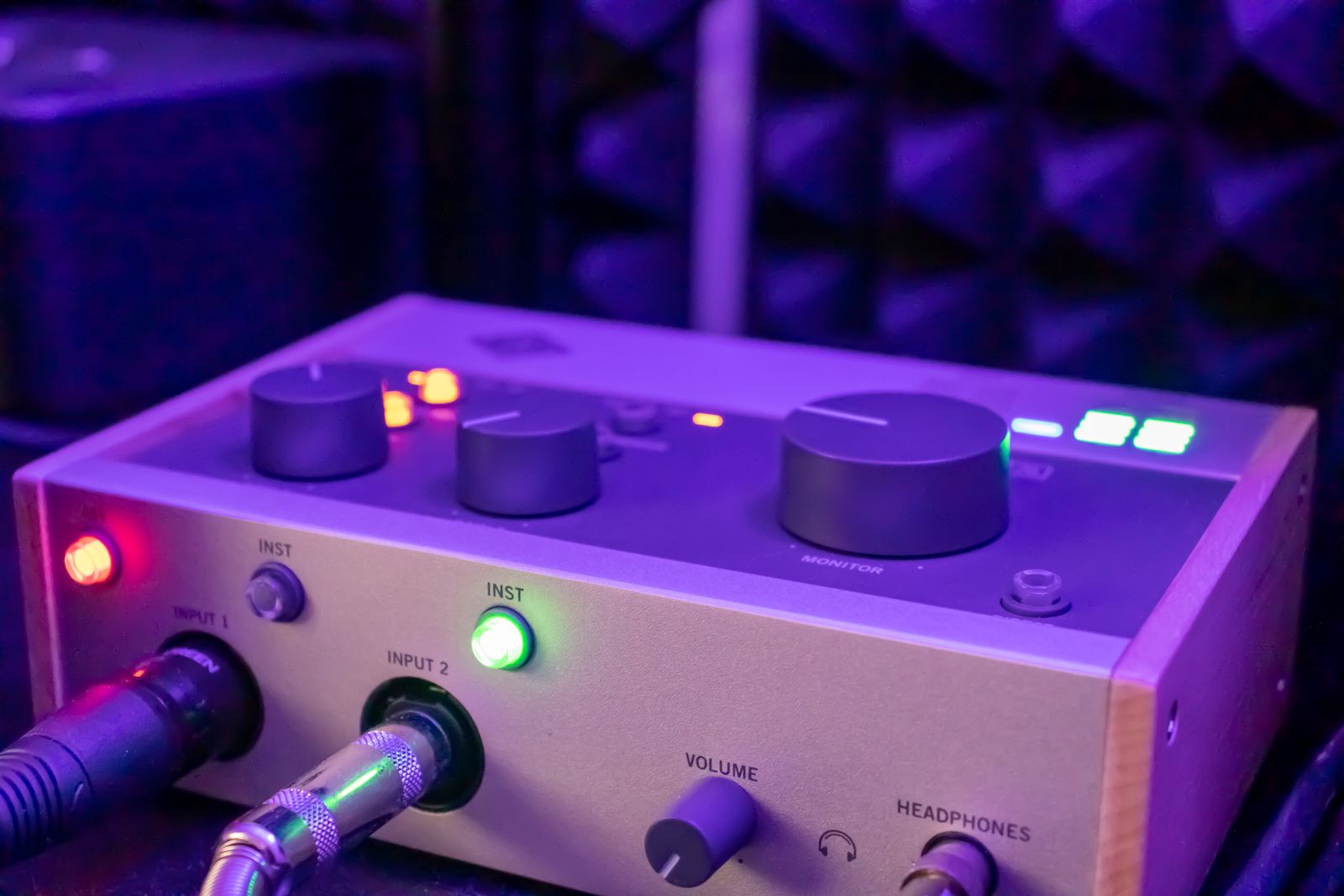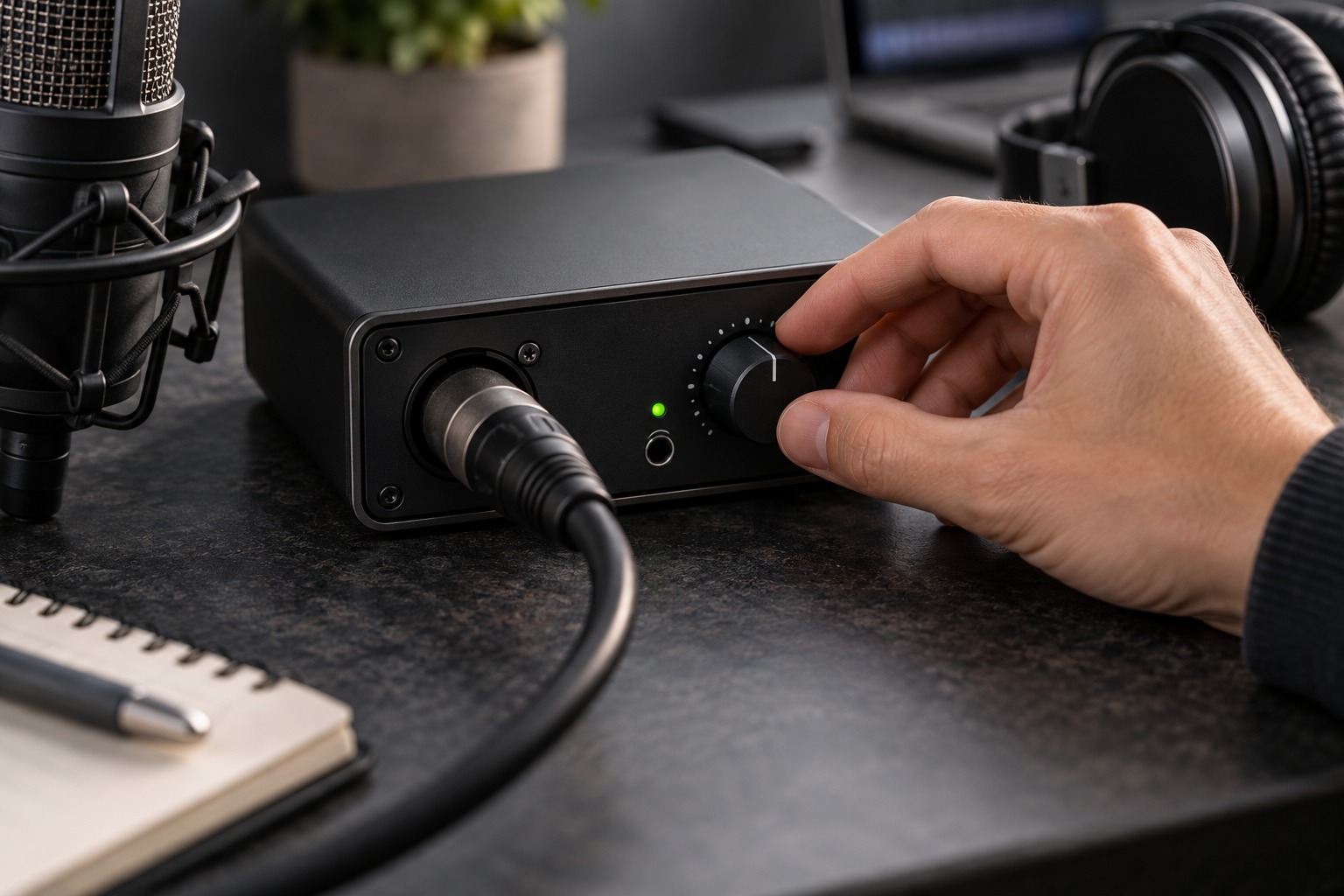
Read the socket’s job
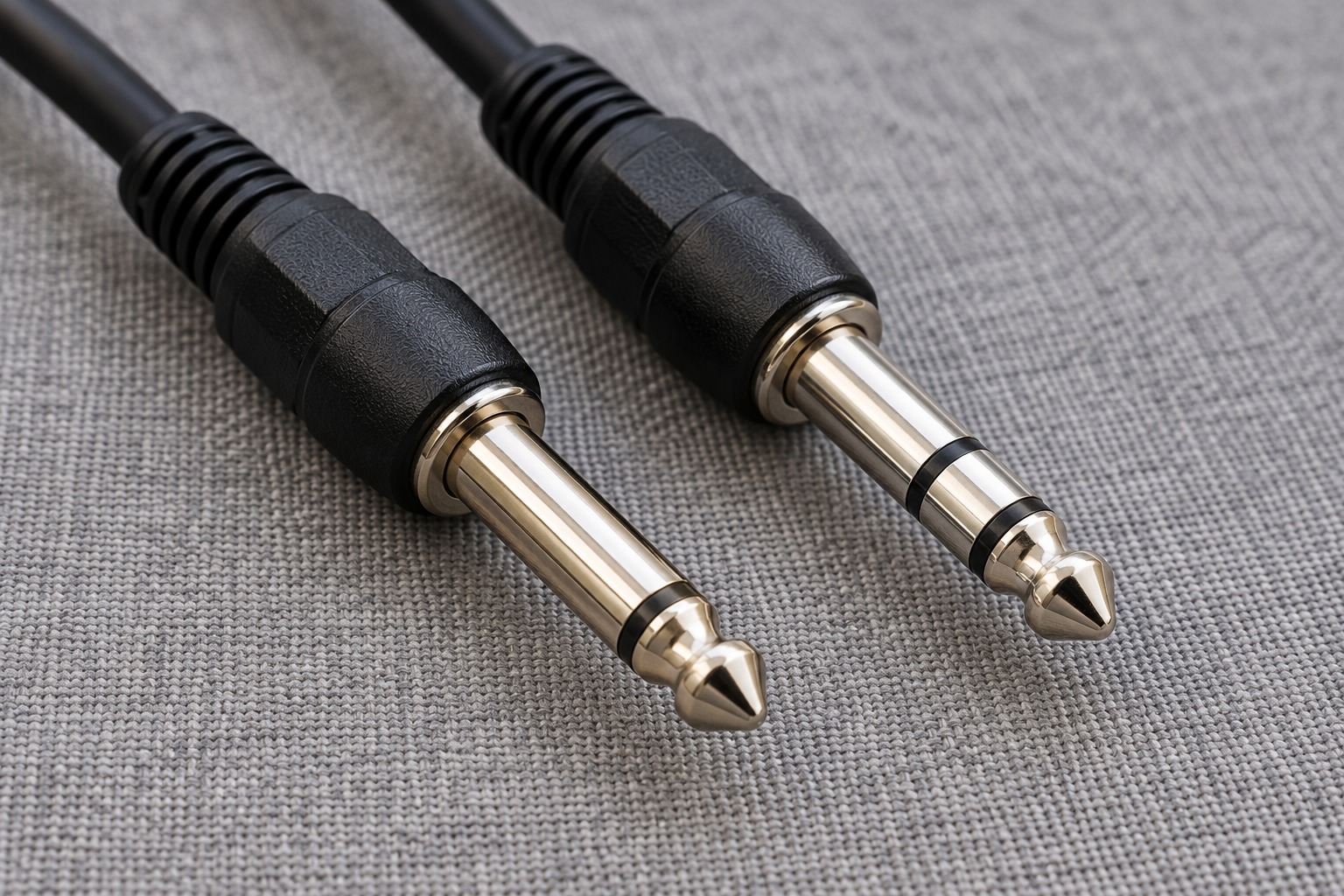
TS stands for tip and sleeve; TRS adds a ring contact. The same TRS shape can carry an unbalanced stereo headphone signal, a balanced mono signal, or an insert send-and-return arrangement. Yamaha’s interconnection guide lists these distinct uses. The equipment manual, rather than the number of insulating bands alone, tells you what the socket expects.
A guitar instrument cable commonly uses TS connectors. A balanced line connection commonly uses TRS connectors where quarter-inch jacks are specified. These are typical uses, not a universal wiring map for every device. Check the source output and destination input together before choosing the lead.
Do not combine stereo into a mono input by accident
A headphone output’s left and right channels are not the positive and negative conductors of a balanced mono signal. Connecting that output directly to one balanced input with a simple TRS cable can produce an unintended result. Use the source and interface manuals to choose a suitable breakout or connection arrangement when recording a stereo output.
Similarly, an insert cable is not automatically a headphone-sharing splitter. Its branches may represent send and return rather than two identical outputs. Label specialized cables and keep their wiring description with them. Two cables with the same three plugs can perform different jobs internally.
Build a cable list from the signal path
Write each connection as source, output type, destination, and input type. Then add the connector and wiring requirement. This takes only a few lines for a small studio and prevents buying adapters based on a photograph. If a listing does not explain its wiring or intended application, choose one that does or ask the supplier before connecting it.
After installation, test left and right channels separately where stereo is intended. For a mono source, confirm that it reaches the expected recording track and monitoring position. Start with low levels when changing connections. Correctly identifying the signal path is a more useful skill than memorizing that one plug is always stereo or that another is always for guitars.
Three similar-looking connections
Consider three desk connections: headphones from the interface, one line output to a powered speaker, and a hardware processor’s insert point. All may involve quarter-inch TRS connectors, yet they do not carry the same arrangement of signals. Keep each cable assigned to its documented task. A successful fit at the socket is only a mechanical check, not confirmation that the contacts carry the expected channels.
If a recording unexpectedly loses centered material, plays on one side, or changes when a plug is moved, stop and verify the route before compensating with software. Check whether stereo has been connected to a balanced mono input, whether an adapter is fully seated, and whether the cable is intended for an insert. These checks are more productive than adding gain to a signal that is wired incorrectly.