Height is a measurement, not a style choice
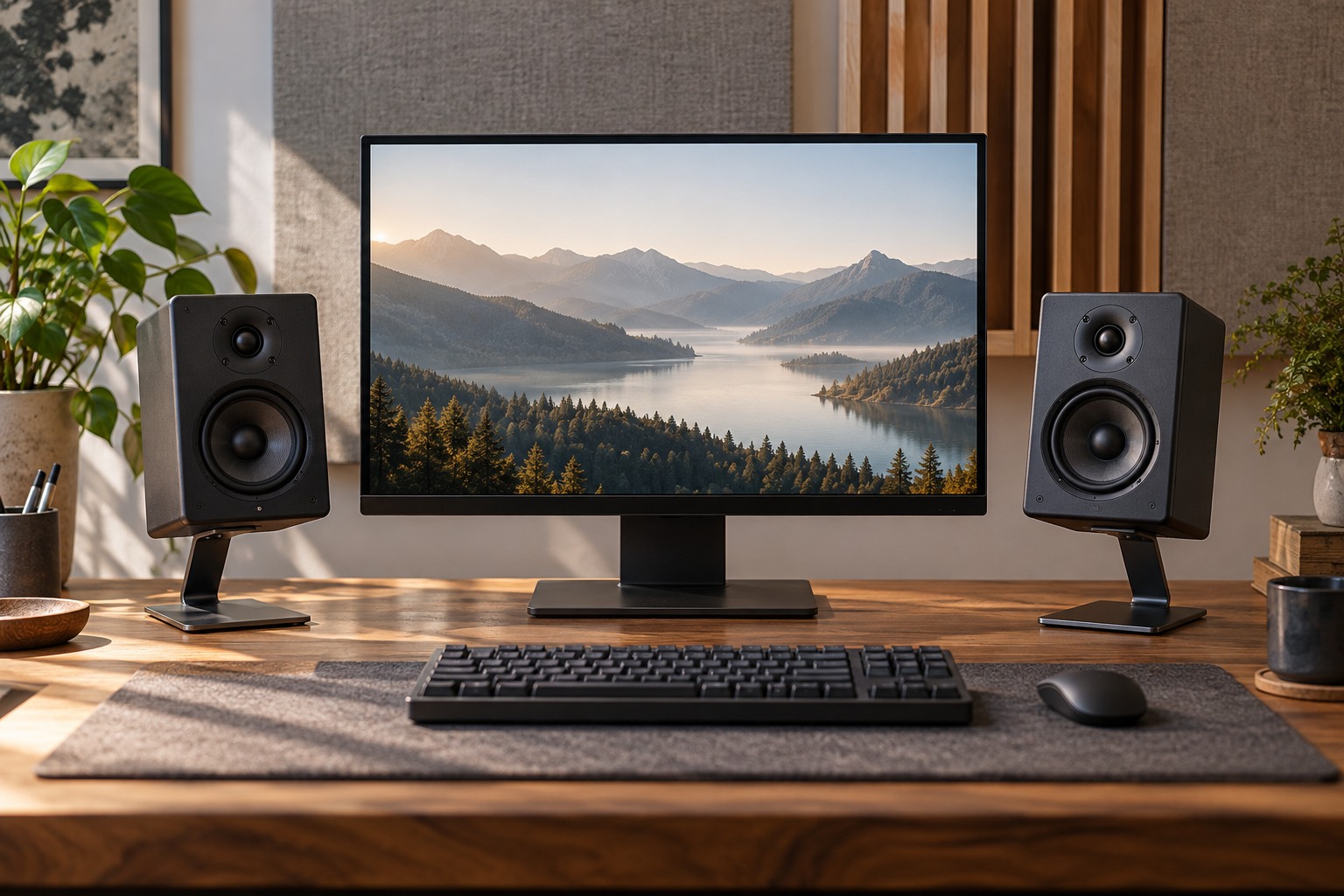
Sit normally and measure the height of the listening position relative to the desk. Compare that with the speaker manufacturer’s recommended listening axis. Then calculate the stand height needed with the speaker on top. Buying the tallest stand available can put the speaker above the intended position just as easily as a low stand can leave it below.
Some stands tilt rather than lift substantially. Check whether the tilt points the speaker toward your seated position and whether the cabinet remains securely supported. Do not assume a tilted platform works with every cabinet shape. Follow the stand’s load and size limits and the speaker’s guidance on orientation.
Inspect the entire footprint
Compare the top plate with the speaker base and the bottom plate with the available desk area. Leave room for the speaker’s rear cable bends. A small base can look tidy while being poorly suited to a tall, heavy cabinet. Keep the load centered and avoid balancing a speaker partly off the platform to clear a screen.
Clamp-mounted stands save surface area but introduce another set of measurements. Check desk thickness, the underside frame, drawers, and any beveled edge. The clamp needs the kind of surface and clearance specified by its maker. A hollow or fragile desktop may require a different mounting solution; do not infer suitability from the fact that the clamp can be tightened.
Check the layout while working
Mock up the position before buying, using stable cardboard outlines rather than balancing the actual speakers on makeshift towers. Move the mouse, open a notebook, and adjust the monitor. If the stand blocks a screen corner or forces your arms outward, reconsider the placement. Speakers should not turn the working surface into an obstacle course.
After installation, route cables with slack and confirm that normal desk adjustments do not pull the stands. Listen from the intended chair position and compare small placement changes one at a time. A stand is a positioning tool; it cannot guarantee that a room’s acoustic problems disappear. Keep the original measurements and any useful positions noted so the setup can be restored after cleaning.