Find the actual contact area
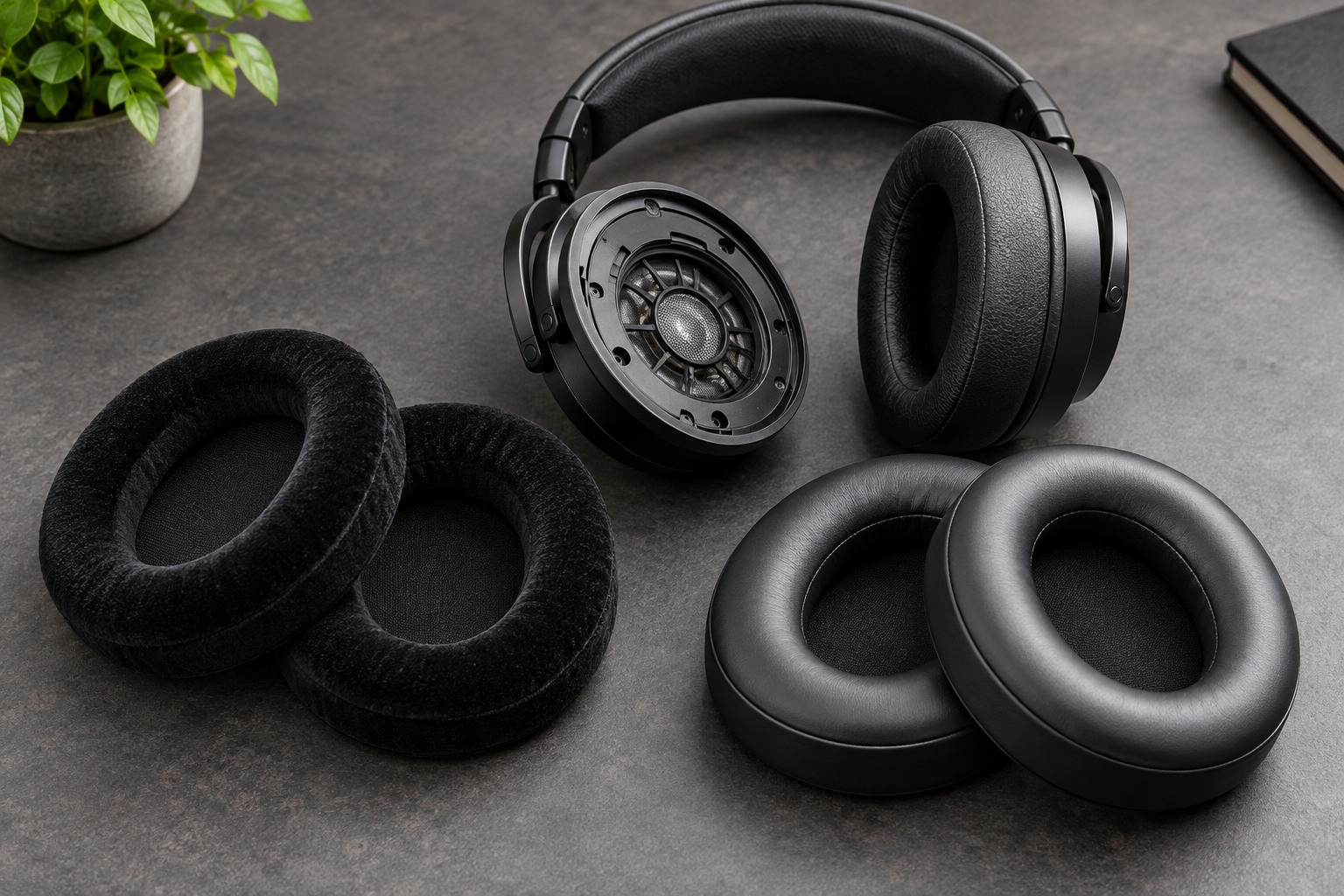
An over-ear design places its cushions around the ear; an on-ear design rests them on it. Product photographs can blur the distinction, especially when a small over-ear cup is shown without a person for scale. Compare the opening with your own ear dimensions and try the model if possible. A nominally over-ear pair that presses on your ears is not delivering the fit its category suggests.
On-ear headphones can be convenient when you want a smaller pair to slip into a bag. Their pressure is concentrated differently, however, so check how the pad sits across the outer ear. Move the headband by a small amount rather than assuming the first position is correct. If no adjustment feels comfortable, the compact size is not compensation for an unsuitable fit.
Size does not reveal the whole design
An over-ear headphone can have an open or closed back, and on-ear models also vary in enclosure construction. Do not assume a larger cup blocks more room noise. Read the enclosure description and test leakage in the setting where it matters. A quiet bedroom and a shared office impose different demands even if the music is identical.
Look at storage dimensions with the headphones folded, including any case. Some large cups swivel flat but do not fold inward. Others fold compactly but leave a hinge exposed unless a case is used. Measure the bag compartment you actually have rather than comparing only product weight. A compact pair accompanied by an oversized rigid case may take up more space than expected.
Try your ordinary movements
Wear glasses if you use them, look down at your phone, and turn toward a second screen. Check whether the pads move or the headband slides. For desk use, leave room for the cable to move with you. For wireless use, locate the controls while wearing the headphones; a touch surface or small button should not require repeatedly shifting the fit.
Choose by the combination of contact comfort and daily handling. Someone who listens for short stretches while moving between rooms may value folding size. Someone who sits at a desk may prefer roomier cups. Neither choice requires a claim that one category sounds better. Compare individual models with familiar recordings and similar listening levels after the fit has passed its own test.