Choose a tie for the job
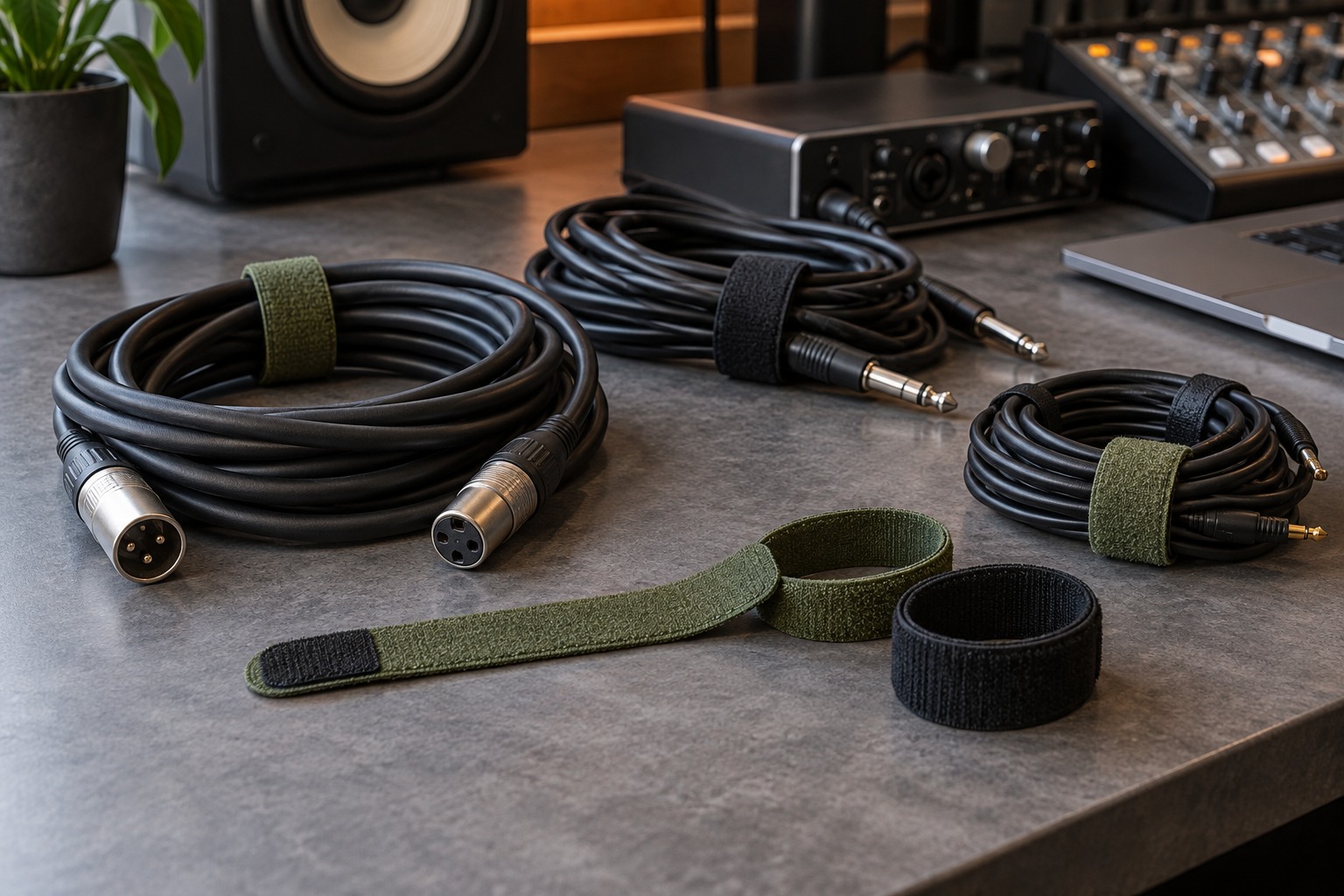
A small hook-and-loop strap suits a single coiled lead, while a longer strap can organize several cables behind a desk. Measure the actual bundle before buying a large pack. A strap that only barely reaches around the cables is awkward to reopen and encourages an unnecessarily tight wrap.
Check how the tie stays with the cable when released. A captive loop can prevent loose straps from disappearing during a rehearsal setup. For a cable that passes through narrow openings, a permanently attached bulky strap may instead become an obstacle. Choose the attachment style around where the cable travels.
Soft straps are convenient near finished surfaces, but their texture still deserves attention. Keep exposed hook material away from fabric covers and delicate bags. If a tie is holding a coil inside a case, place its closure where it will not rub against an instrument or screen.
Leave movement where it is needed
Arrange cables in their natural path before fastening anything. Leave enough slack for a controller to slide forward, an interface to be inspected and a microphone arm to move through its intended range. Test those movements while the equipment is switched off if changing connections is part of the work.
Fasten a bundle at a useful point rather than immediately against a plug. The connector and its strain relief should not be pulled sideways by a taut group of wires. A tie is for organizing the route, not suspending the weight of equipment or forcing an unsuitable cable to reach a port.
Group leads by the way they are used. Two cables that always travel with a keyboard can be stored together; a headphone extension borrowed several times a day should remain easy to remove. Bundling everything into one large rope can make a simple change require dismantling the whole desk.
Keep the system readable
Use a small number of colors or written labels with a clear meaning. For example, a label can name the destination while the strap simply holds the coil. Avoid a complicated color code that nobody remembers after a month away from the setup.
Reopen the ties whenever the equipment layout changes. Check for trapped cables, tight bends and leads that no longer belong in the bundle. Replace straps with worn closures instead of wrapping additional ties around them. A tidy desk should remain easy to service, with individual connections reachable and enough spare length to inspect them without pulling on the equipment.