Look at the headphone's resting shape
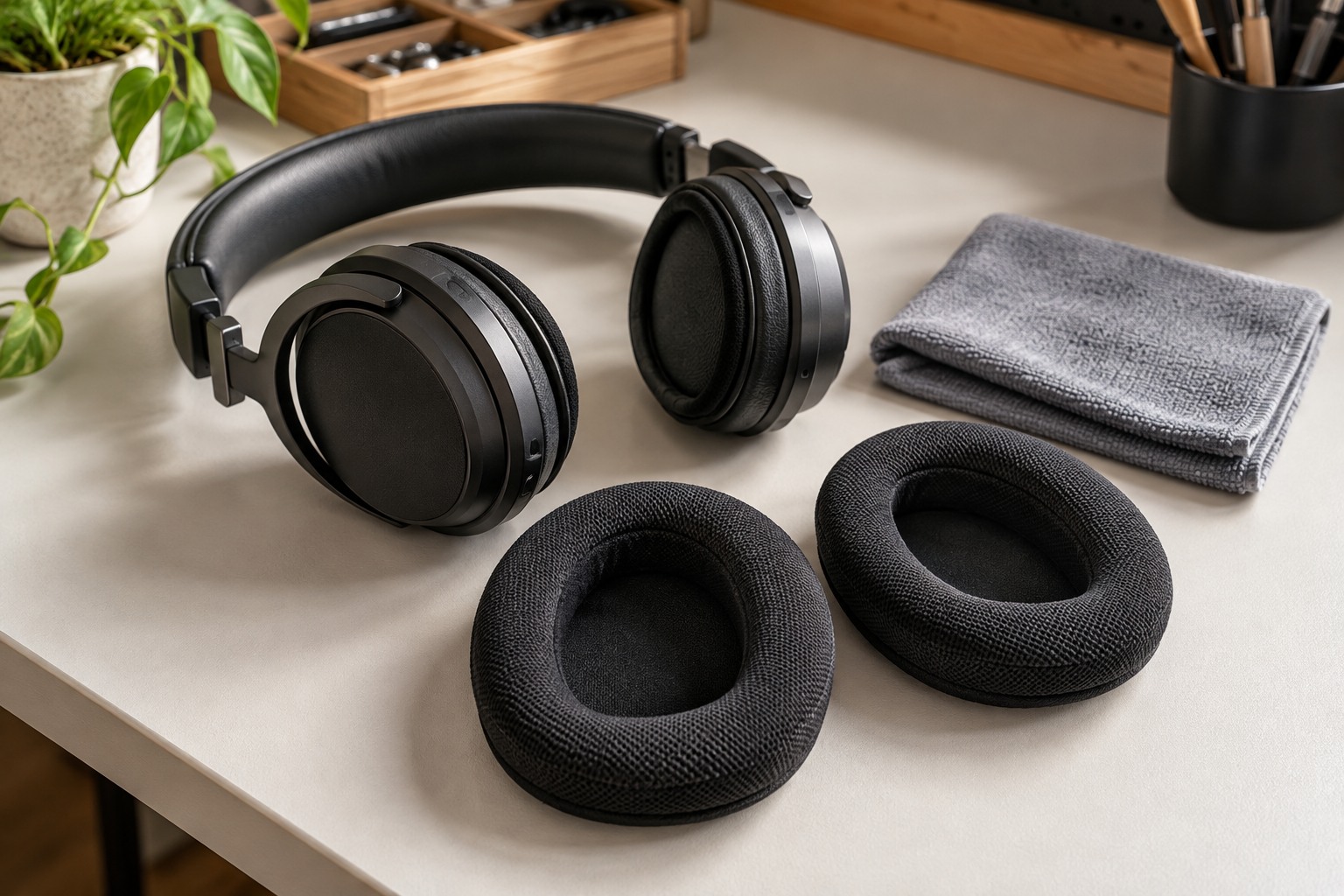
Place the headphones down gently in the position shown by their storage instructions. Notice whether the earcups rotate flat, whether the headband uses a separate suspension strap and whether the cable detaches. Do not force a hinge to fold simply because a similar-looking model folds in a product photograph.
A stand should support the intended part of the headband over an appropriate area. Compare its top surface with the band rather than choosing solely by the height of the stand. A narrow hook may be awkward for a wide soft suspension strap, while a large curved support can be unnecessary for a compact on-ear set.
Leave clearance below and around the cups
Measure from the support point to the lowest part of the earcups and include the cable connector. The headphones should not rest on the plug or press their cushions against a rough desk edge. If the cable remains attached, give it a relaxed route instead of letting its weight pull sideways on the socket.
Consider the whole desk movement. A stand beside a mouse can be knocked repeatedly, and an under-desk hook may put the headphones in the path of a chair arm. Try a temporary placement with the headphones safely supported before buying a fixed holder. Check the holder's mounting instructions and the surface it is designed for.
Keep the resting place away from spilled drinks and from direct pressure by books or other equipment. A clear shelf can work as well as a dedicated accessory when the headphone is laid down appropriately. The useful feature is predictable support, not the number of functions advertised on the stand.
Use a case for transport, not compression
For a bag, compare the internal case shape with the headphones in their permitted folded position. Allow space for the earcups and headband without having to press the lid shut. An external measurement does not reveal how much room is lost to padding or an internal accessory compartment.
Place detachable leads in their own space and keep metal plugs away from the cushions. Do not use the headphones themselves to hold a tightly wrapped cable. If the case has an internal strap, use it as designed rather than tightening it until the headphone frame bends.
Before closing the case, check that the pads are dry and that no cable crosses a hinge or zipper. When returning to the desk, inspect the support and storage area for grit. A consistent location makes it easier to notice a damaged hinge or cable before the next listening session.