Separate the vulnerable ends
Look at the connector rather than treating every cable in the collection alike. An exposed pin arrangement, an optical end and a sturdy jack housing need different kinds of attention. Use the original protective cap when one was supplied and intended for storage, and keep caps with the relevant cable instead of mixing unknown sizes together.
Do not put an improvised plug into a socket to keep it clean. A cap or cover should be designed for the connection and should come off without force. If no suitable cap is specified, a clean separate compartment can be more appropriate than inserting an unrelated object into the connector.
Choose a bag around the packed shape
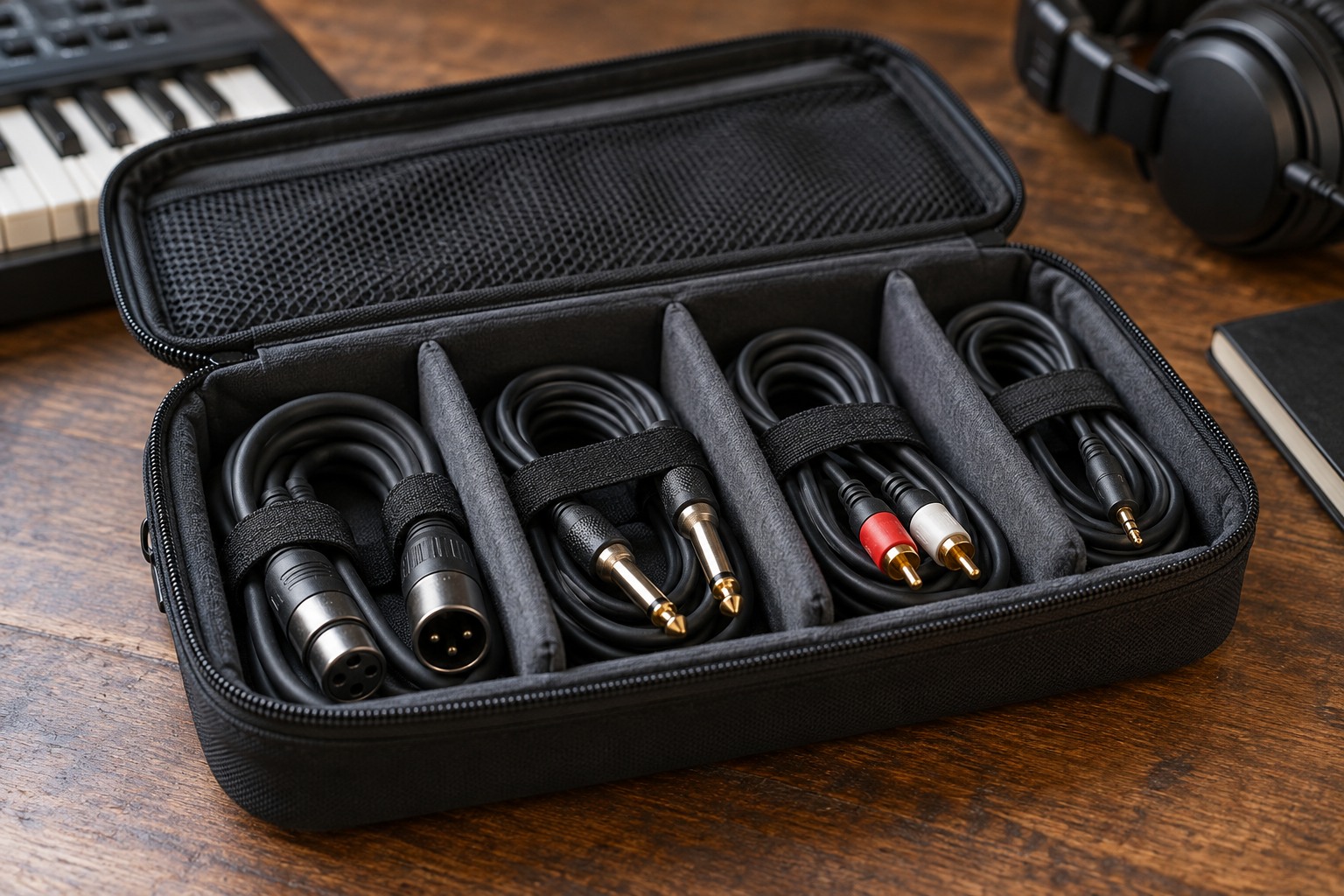
Measure the cable when it is loosely coiled with its connectors resting beside the coil. A pouch that fits only after the plugs are pressed into the cable can create a poor storage habit. Include enough space for strain reliefs, which should not be bent sharply against a zipper or rigid divider.
A padded divider helps keep heavier connectors from knocking against a small adapter or a device surface. Check that the divider actually reaches the bottom of the bag and remains in place during carrying. Loose sections that slide aside can leave the contents rubbing together despite the bag looking organized when open.
Use a separate compartment for small adapters and keep each type identifiable. Clear pockets can help, but visibility is not a substitute for cushioning where it is needed. A simple written inventory inside the lid can show whether an adapter is missing without requiring every pouch to be opened before a session.
Pack clean and inspect on return
Let equipment and cables dry according to their care instructions before enclosing them. Keep the bag away from spilled drinks, damp clothing and loose debris. If it has picked up grit, empty and clean it using the bag maker's method before returning delicate connectors to it.
When unpacking, hold a cable by its housing or coil rather than pulling one end out from under heavy objects. Check for bent pins, loose shells or damaged strain reliefs. Set a questionable lead aside and identify it for repair or replacement; do not put it back in the ready-to-use compartment.
For long-term storage, retain the product information for unusual connector types. A photograph of an intact connector and its model description can help identify a replacement later. The goal is a collection that can be removed one item at a time, with each connection protected and each cable still following a relaxed shape.