The connector is not the signal type
RCA sockets are used for many analog audio connections, including both phono and line-level equipment. A raw turntable cartridge signal needs a suitable phono stage before entering a normal line input. A turntable with a built-in preamp may provide a switchable line output instead. Audio-Technica’s turntable instructions distinguish these routes explicitly; the cable color does not decide which route is correct.
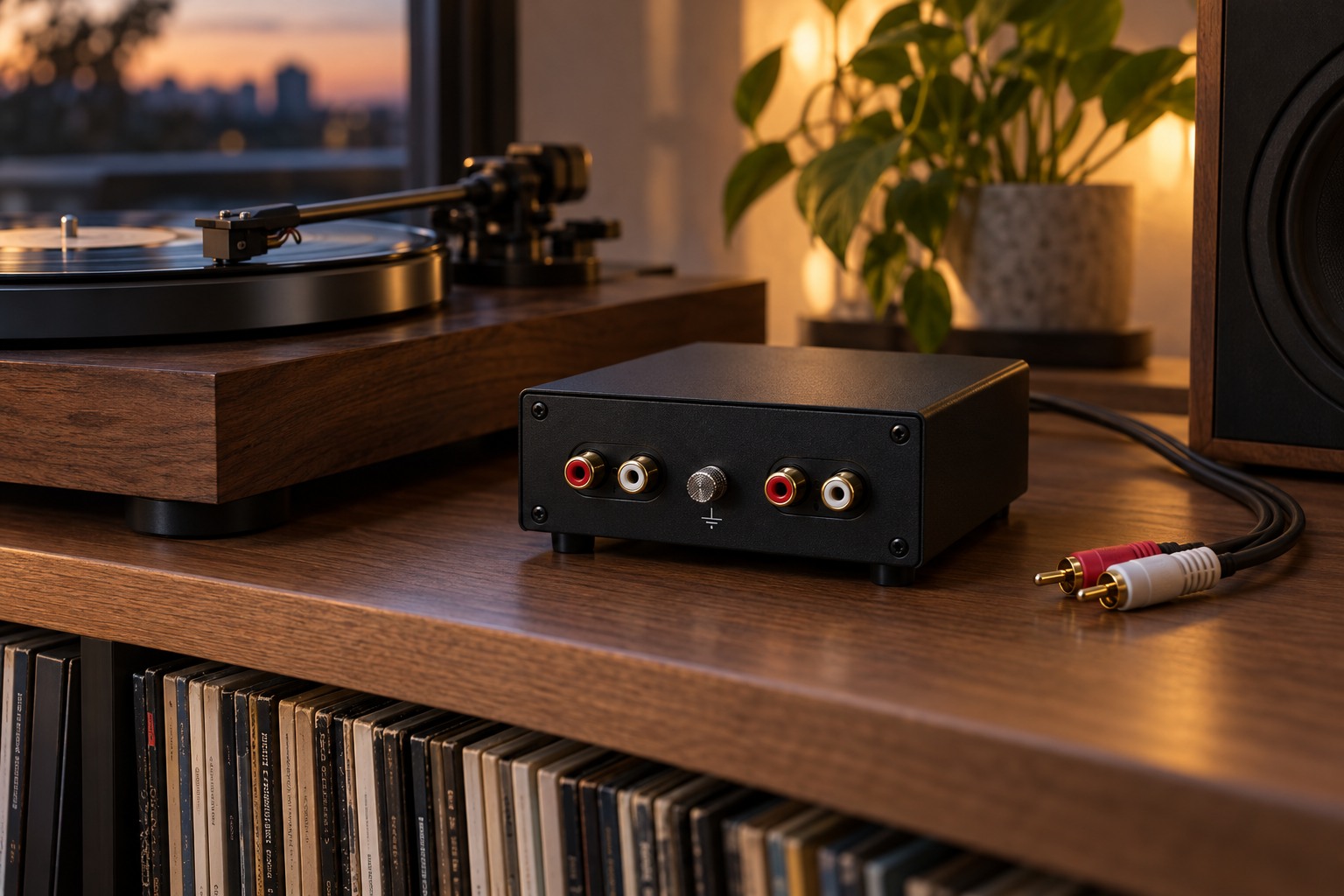
Draw the path in words: cartridge, phono stage, line-level input, amplification, speakers. The phono stage may be inside the turntable, inside an amplifier or powered speaker, or in a separate box. Its physical location can change while its place in the signal path remains the same.
Use one appropriate phono stage
If the turntable’s internal stage is enabled, connect its line output to a compatible line input. If you want to use an external phono stage, bypass the internal one where the turntable supports that option and follow both manuals. Feeding an already amplified line signal into another phono stage is not an extra quality upgrade; it is the wrong routing arrangement.
A separate phono stage must also suit the cartridge. Moving-magnet and moving-coil requirements are not interchangeable by default, and some products provide selectable gain or loading. Use the cartridge manufacturer’s specified requirements. If you cannot identify the cartridge fitted to a secondhand turntable, establish that information before purchasing a phono stage around an assumption.
Make comparison settings reproducible
When comparing an internal and external stage, keep track of which route is active and lower the listening level before changing connections. Similar volume is important when judging the result. A louder route can seem more impressive simply because it is louder. Do not change cartridge setup, speaker placement, and phono stage simultaneously if you want a useful comparison.
Label the chosen input in your system notes and photograph any small switches behind the turntable. Keep the manuals with the equipment record. This is especially useful when a receiver offers both PHONO and AUX inputs or when a turntable switch is hidden underneath the plinth. Clear routing is more valuable than adding a component whose function is already being performed elsewhere.