Confirm what the room provides
Ask which amplifiers, stands, microphones and monitoring connections will be available. Write down the specific items you must bring rather than assuming every rehearsal room has the same collection. If another musician is supplying a shared accessory, agree who checks it before departure.
Trace your own signal path from instrument or controller to the room's equipment. Note each cable and power requirement along that path. A spare cable is only useful if its connectors and wiring match the connection it may replace, so avoid filling a bag with unrelated adapters.
Pack the approved power supply with the device it serves. Labeling similar adapters reduces confusion at the end of a session when several musicians are gathering black cables from the floor. Do not borrow an unknown supply simply because its connector appears to fit.
Choose a small reserve
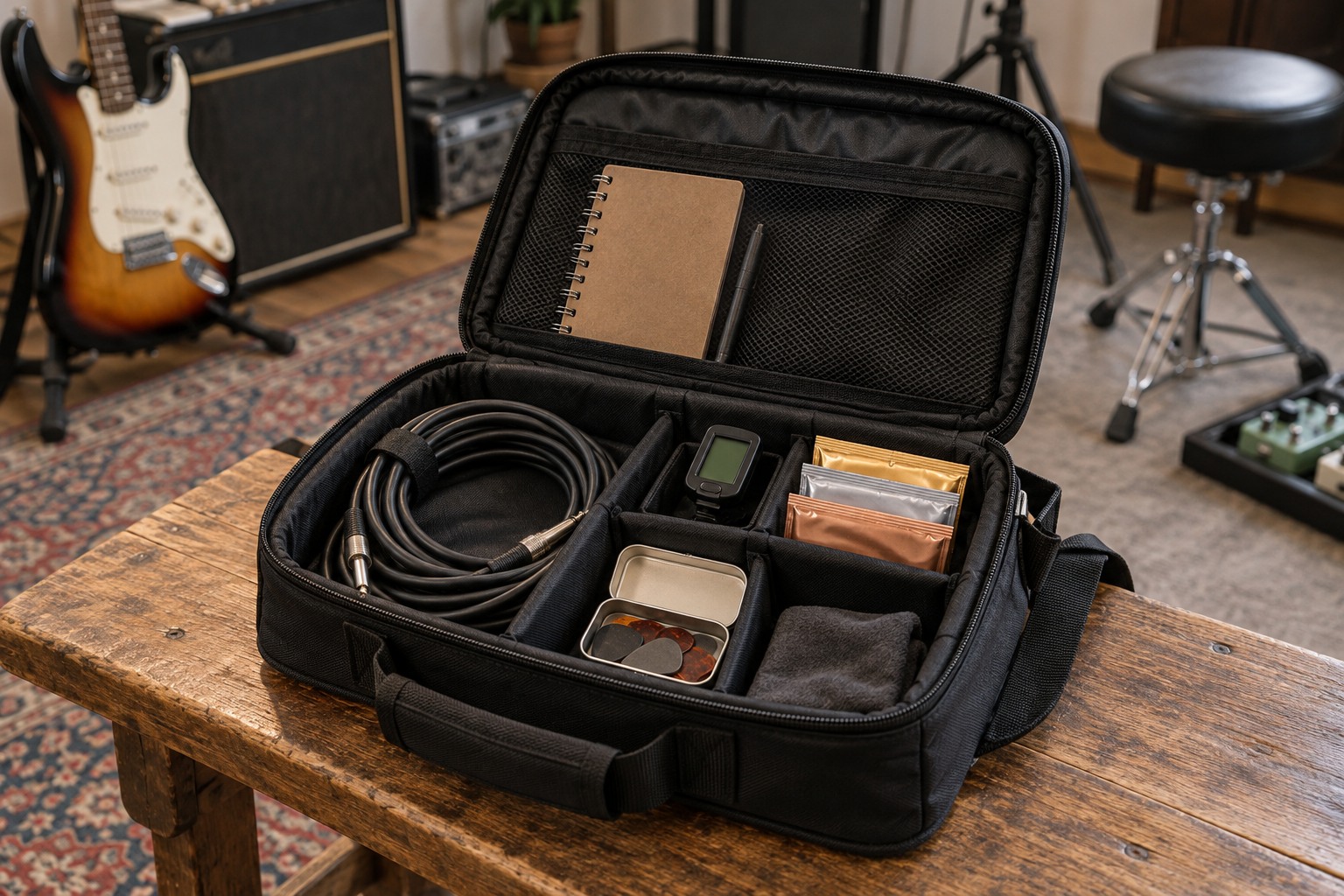
Include a spare for the cable most likely to interrupt your own setup, along with consumables appropriate to the instrument. A guitarist's kit might include the correct strings and picks, while a portable recorder may need compatible storage and an approved battery set. These are different requirements, not a universal shopping list.
Keep small items in a visible pouch with a consistent place for each group. Separate cleaning materials from electronics and protect delicate connectors from loose tools. A pouch that opens flat can make a missing item easier to spot than a deep pocket full of mixed accessories.
Include only tools you know how to use appropriately. A rehearsal break is not the place to attempt an unfamiliar internal repair. If a component fails beyond a simple approved replacement, use the agreed backup arrangement or pause that part of the setup.
Make packing repeatable
Check the kit at home against a short list, then do the same before leaving the rehearsal room. Add a note when something is used so that a spare string or battery set is replenished before the next session. A reserve that quietly becomes the everyday supply will not remain a reserve for long.
Keep personal items recognizable without placing labels on sensitive surfaces or obscuring product information. A name tag on a bag and a removable identifier on a cable strap may be enough. Leave space for the return journey rather than packing so tightly that a hurried teardown requires bending cables or forcing closures.
Review the kit after a few sessions. Remove accessories that belong to equipment you no longer use, and add an item only when a real need has become clear. The goal is a bag whose contents you understand, with the essentials reachable when the room is busy.