Try a representative part
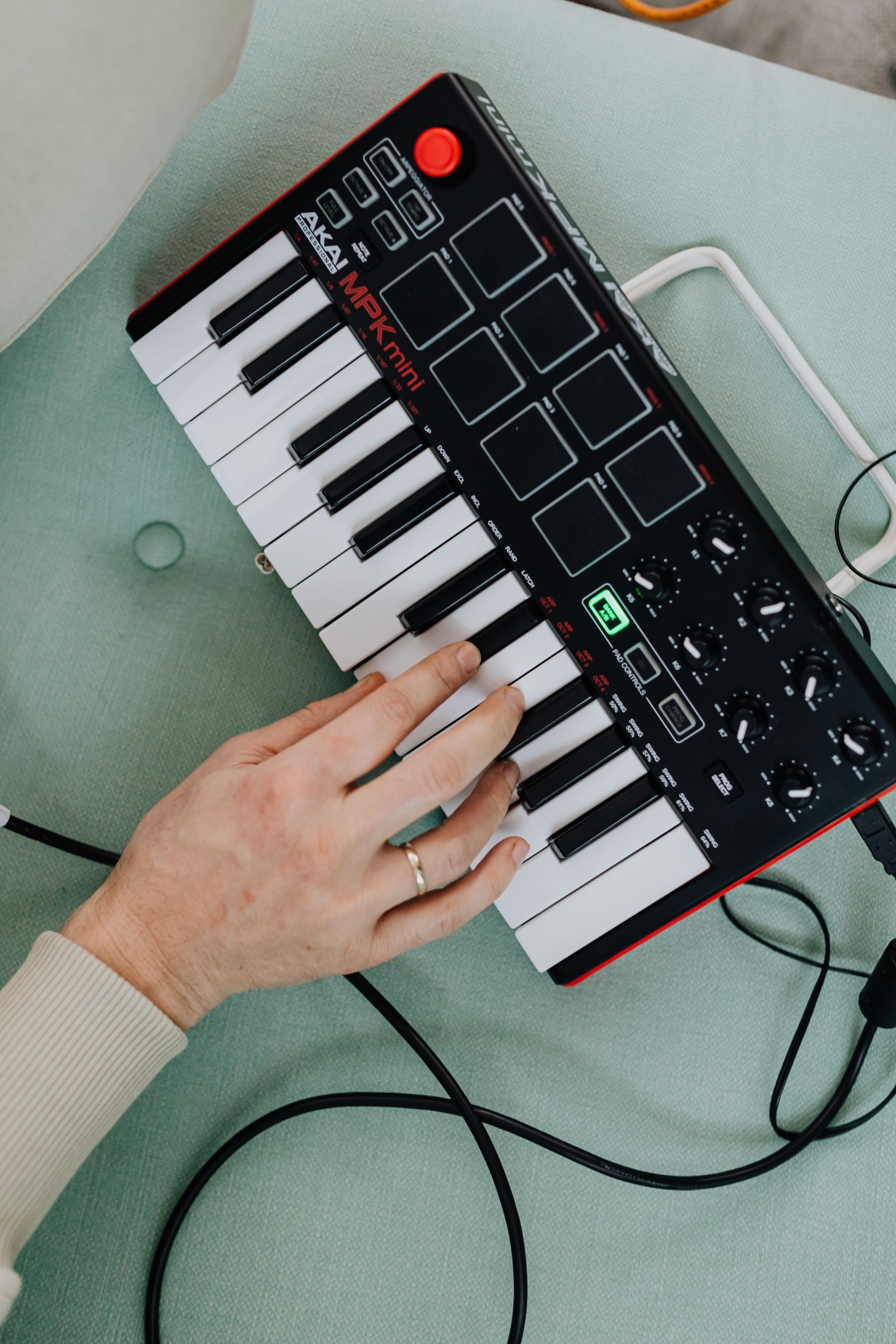
Choose a bass line, chord progression or two-handed passage that resembles your work. Play it on the proposed range without repeatedly stopping to move octaves. A compact controller can be entirely suitable for entering one part at a time, while a wider keyboard may be more comfortable for simultaneous bass and chords. Neither use is more legitimate; they simply need different space.
Check where octave buttons are located and whether their state is obvious. If shifting range is part of the workflow, practice doing it without losing your place. A small display or colored indicator can be useful, but only if you understand what range is currently active.
Measure the whole controller
Key count does not determine total width by itself. Pitch and modulation controls, pads and side panels can add space. Measure depth too, including rear plugs and the room needed for your hands. A controller that fits between speakers may still push the computer keyboard so far away that editing becomes uncomfortable.
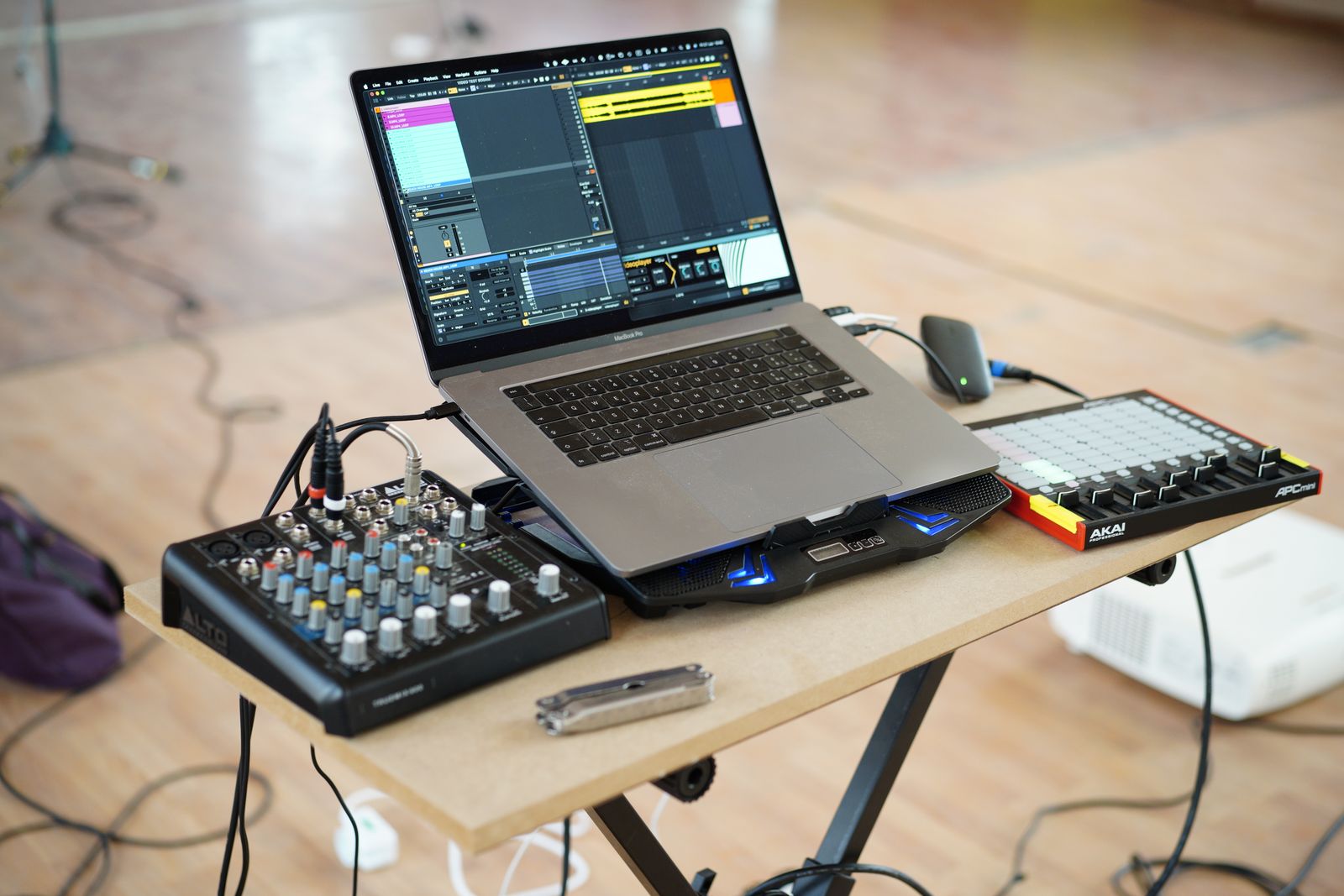
Make a full-size paper outline on the desk and add the normal mouse and typing area. If the controller will sit on a tray, check load capacity, clearance and whether the tray remains steady while playing. Do not treat a narrow desk drawer as suitable support without checking its construction and intended use.
Keep control features tied to tasks
Pads, knobs and transport buttons are useful when they replace actions you repeat. If you mostly play piano parts, extra keys may matter more than a large pad grid. If you program short patterns and automate effects, a compact key range with accessible controls may make more sense. Avoid choosing solely by the total number of physical controls.
Confirm how the controller connects and whether it produces sound itself. Many MIDI controllers need a computer or another sound source. Built-in speakers and a headphone socket should never be assumed from the keyboard shape. Check the software and power arrangement before planning a portable setup.
Finally, try moving the controller to its storage place. A larger model that is inconvenient to unpack may be used less often than a smaller one that stays ready. Choose the range that covers the work you actually perform and the arrangement you can keep available, rather than buying unused keys for an undefined future task.