Start with the base footprint
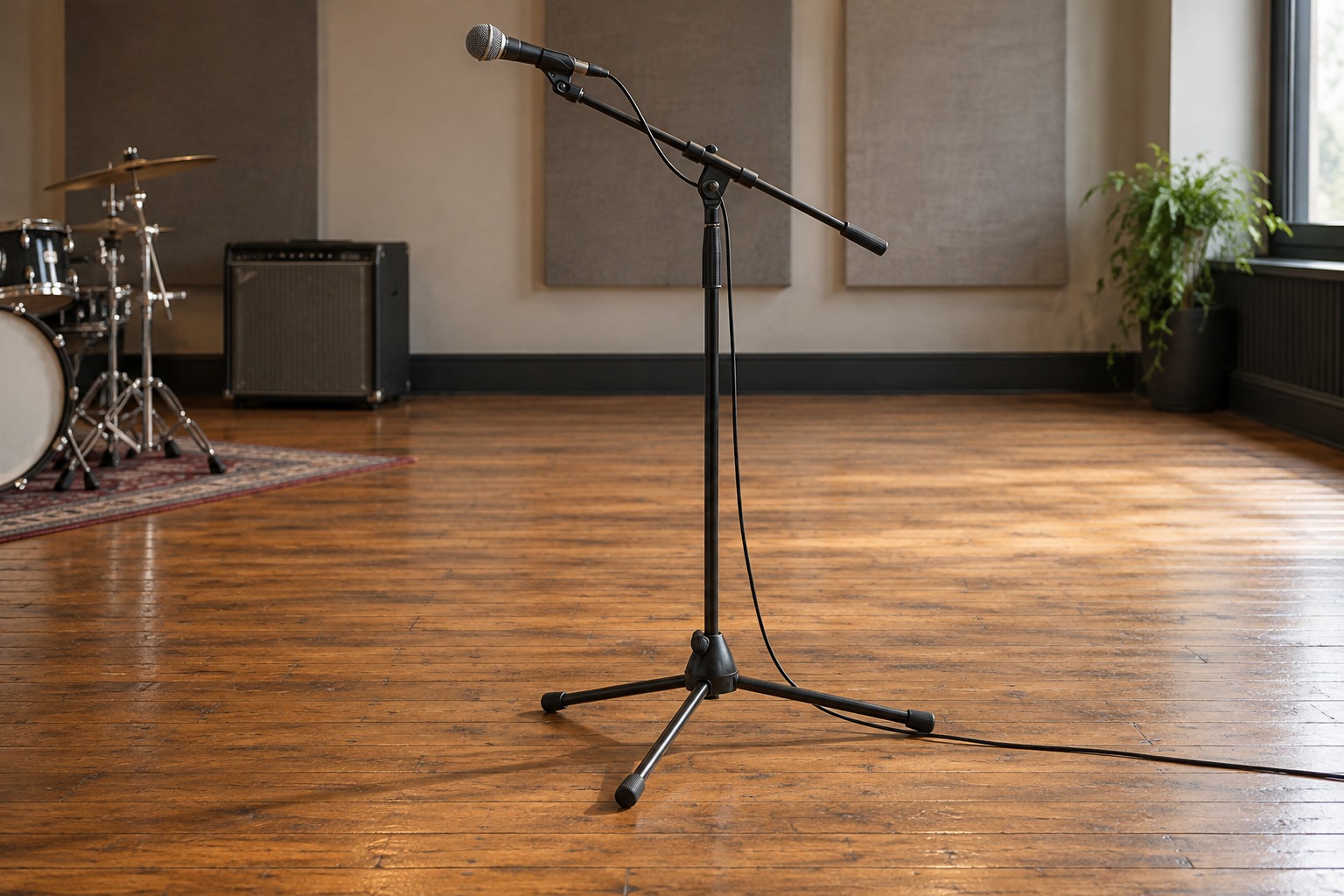
Place the stand on a stable surface and open or position the base as instructed. Leave room for the performer’s feet, pedals, and instrument movement. A tripod that fits between furniture when folded may occupy much more floor area when correctly opened. Do not shorten its footprint simply to hide it under a chair.
Consider where the microphone’s weight will sit relative to the base. Extending a boom far to one side changes the balance. Follow the manufacturer’s load and extension guidance and use any supplied counterweight as directed. A stand that appears stable without the microphone may behave very differently after the complete assembly is attached.
Adjust while supporting the load
Support the microphone and boom while loosening a joint. Set the height and angle, then secure the relevant controls before letting go. Avoid using a threaded knob as a handle to drag the stand across the floor. If a joint repeatedly slips under a supported load, check wear and compatibility rather than adding force indefinitely.
Include the shock mount and pop filter in the load assessment. A large filter mounted far from the pivot can change the balance even if it seems light on its own. Keep the setup within the stand’s intended configuration; improvised weights and extensions can create new instability.
Keep the cable from becoming a lever
Leave a relaxed loop near the microphone and secure the cable along the stand using appropriate clips or straps. The cable should not pull the microphone downward or run taut to the interface. Route the remaining length away from walking paths and moving chair legs. A cable snag can overturn an otherwise stable stand.
Before recording, have the performer take their normal position and move through the expected range. Check that the stand does not interfere with the guitar neck, keyboard, or music stand. Record a short test after the final adjustment, then avoid unnecessary movement during the take. When packing away, remove or protect the microphone as instructed and collapse the stand in a controlled sequence rather than carrying a long extended boom through a doorway.