Locate the phono stage
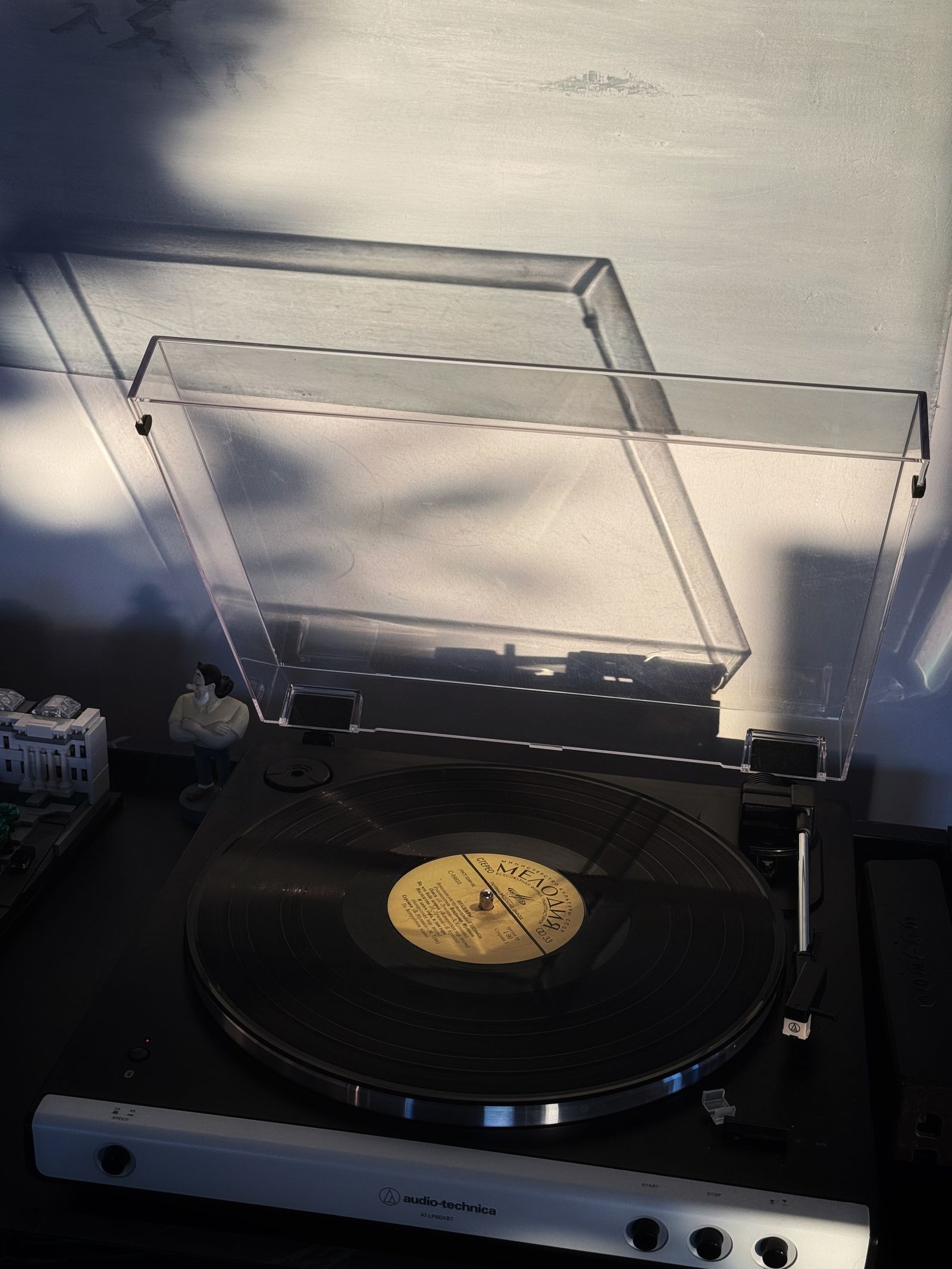
Check the turntable for a built-in phono preamp and a switch labeled PHONO and LINE or equivalent. Then inspect the powered speakers for a dedicated phono input. Audioengine’s turntable guide explains that a built-in phono preamp can let a turntable connect directly to compatible powered speakers. Powered amplification alone does not mean that the speakers accept a raw phono signal.
There are several possible routes. A turntable with its preamp enabled can feed the speakers’ line input. A turntable with its preamp bypassed can feed a compatible phono input on the speakers. If neither provides a phono stage, a separate compatible phono preamp goes between them. Write down which device performs that job so the signal is not accidentally sent through two phono stages.
Match the labels at both ends
Use the manuals to confirm the switch positions and input selection. A LINE output belongs at a line-level input, often labeled AUX or LINE IN. A raw PHONO output belongs at the appropriate phono stage. Matching red and white RCA plugs is not enough because phono and line connections can use the same physical connectors while carrying different signal levels.
If a separate phono stage has a cartridge-type selector, check the cartridge’s requirements before using it. Do not assume every cartridge works with the same setting. Follow the turntable’s grounding instructions where a ground lead is provided. Keep the equipment powered down or the volume lowered as directed while making connections, then start listening at a low level.
Give the turntable a stable place
Choose a level, stable surface with room to open the dust cover and operate the tonearm. Avoid placing the speakers on the turntable plinth. If they share furniture, assess whether speaker vibration or ordinary footsteps interfere with playback and consider a more separated arrangement. Leave cable slack so reaching behind the system does not pull the turntable toward the edge.
Arrange the volume control where it can be reached without leaning across a playing record. Check the length of the supplied turntable cable before choosing opposite ends of a room for the components. A tidy layout is helpful, but do not hide connections so thoroughly that you cannot identify the phono-stage switch later.
Troubleshoot by following the signal
If playback is extremely quiet or thin, recheck the phono-stage route before raising the volume substantially. If it is overloaded or distorted, verify that a line-level signal is not entering a phono input. These are connection checks, not a diagnosis of every possible fault. Inspect the exact device instructions and test one change at a time.
Once the system plays correctly, note the switch positions and input used. That small record prevents confusion when someone connects another source or moves the equipment for cleaning. You can then judge the speakers and turntable as a working system instead of mistaking a routing error for poor equipment performance.