Find the instructions for the surface
Check whether you are caring for an acoustic piano, digital piano or controller, then locate its maintenance guidance. A textured key surface can have different requirements from a glossy cabinet. If the instrument is older or its key material is uncertain, ask the manufacturer or a qualified piano service provider before applying a chemical treatment.
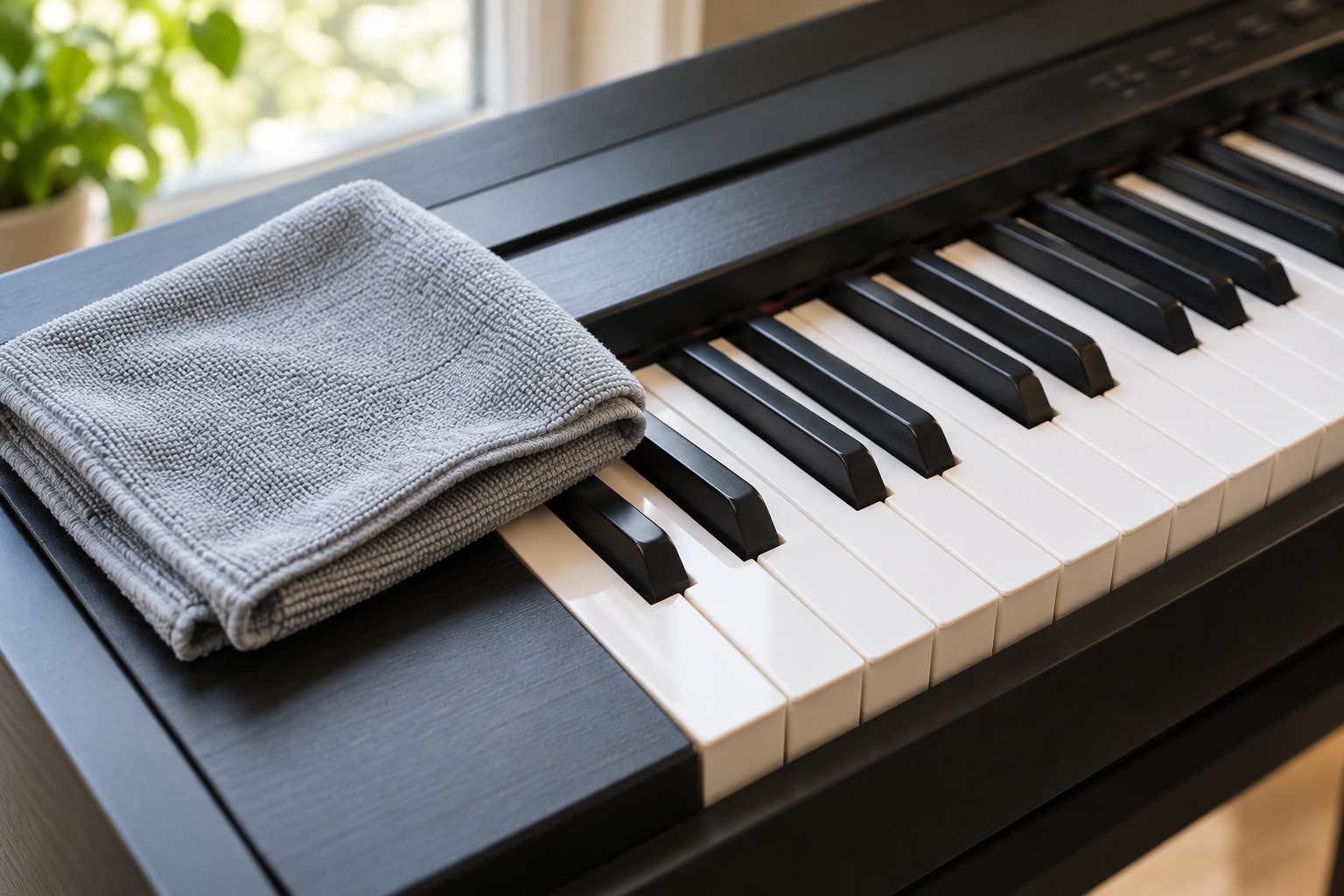
Yamaha's piano maintenance guidance calls for a soft cloth and separate cloths for the keyboard and cabinet finish. It also warns against alcohol on the keys because of possible cracking. This is a manufacturer-specific reference, not a reason to transfer another instrument's cleaning recipe without checking its own instructions.
Prepare a clean cloth and a clear area
Remove loose objects from the keyboard area and switch off electronic instruments as their instructions require. Choose a soft cloth that is free of grit, loose threads and residues from furniture polish. A cloth that has been used for another household task should not be assumed clean enough just because it looks dry.
Begin with the method permitted for routine dust removal. If the instructions allow a damp cloth for marks, control the moisture exactly as directed and keep it out of gaps between keys. Do not spray the keybed or pour a cleaner onto the instrument. More liquid is not a substitute for choosing the right cleaning method.
Work in a way that lets you see the surface being cleaned. Avoid pressing sideways against a key or trying to reach underneath it with an improvised tool. If a key sticks or feels mechanically different after a spill, surface cleaning is not a complete repair. Keep the instrument out of use as appropriate and obtain service guidance.
Prevent the next layer of dirt
Wash and dry your hands before playing, and keep food and drinks off the instrument. A cover or fallboard can reduce exposure to dust when used according to the maker's instructions. Check that nothing is resting on the keys before closing it and that a loose fabric cover does not press on controls.
Keep the key-cleaning cloth separate and label it if several similar cloths are stored nearby. Follow its washing instructions so that detergent or fabric-treatment residue does not become the next problem. Store it somewhere clean rather than folded on a dusty shelf beside the piano.
A repeated stain that does not respond to the approved method is a reason to ask for advice, not to escalate to abrasives or stronger solvents. Preserve the finish and key action first. A clean-looking result is not useful if the process changes the texture or leaves moisture where it cannot be inspected.