The return connections are different
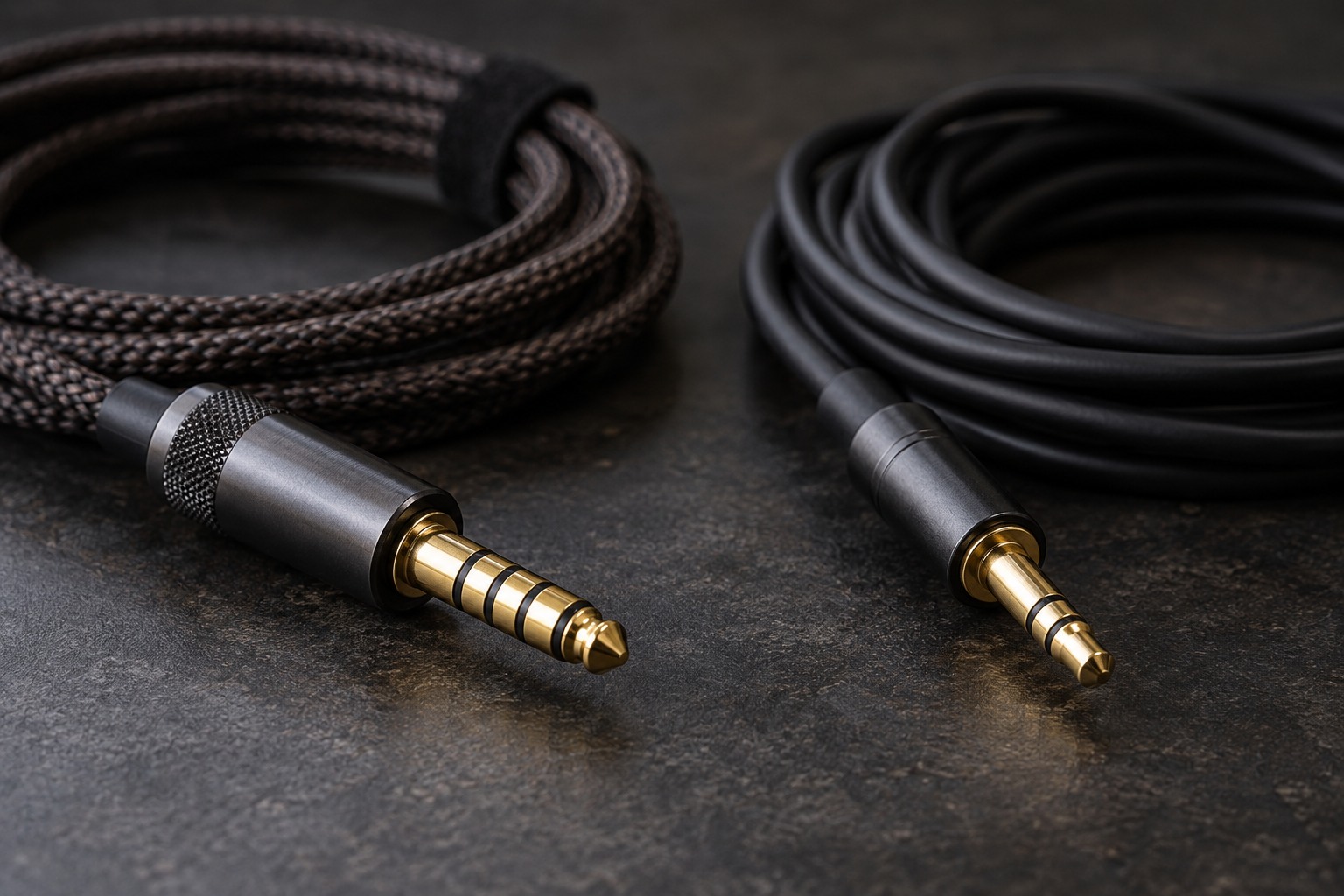
A conventional stereo headphone connection commonly shares a return conductor between the left and right channels. A balanced headphone output uses separate driven connections for each channel. This is why a generic adapter from a single-ended headphone cable to a balanced amplifier socket can be inappropriate. FiiO warns that incorrect adapters can short output terminals and damage equipment.
Read the amplifier’s output labeling and manual, then check the headphone cable’s wiring specification. A 4.4 mm socket may be associated with balanced headphones, but appearance alone is not a complete pinout check. Do not repurpose a cable because it fits physically or because an online listing uses the word balanced without explaining compatibility.
Start at the headphone end
Some headphones have detachable cables that permit a compatible separately wired replacement. Others do not. Confirm that the manufacturer supports the intended cable arrangement for the exact model. Even detachable connectors can use different locking systems or pin assignments. A cable intended for another headphone family is not automatically suitable.
If the stock cable terminates in a standard single-ended plug, use the amplifier’s matching single-ended output unless the manufacturer provides a supported alternative. There is no requirement to use every socket on a device. Avoid experiments that connect active output terminals together, and ask the maker when the wiring is unclear.
Compare use, not the label
Different outputs on an amplifier may provide different levels. Lower the volume before changing connections and follow the device’s connection sequence. A louder result is not by itself evidence of greater detail or better reproduction. If making a listening comparison, match the perceived level carefully and keep the recording and headphone fit unchanged.
Consider the practical costs of a different cable: weight, stiffness, length, and compatibility with other sources. A cable that works only with one desk amplifier may complicate portable listening. Choose a balanced connection when it is part of a verified system that meets your needs, rather than treating it as a mandatory upgrade from an already satisfactory single-ended setup.
Write the connector chain before ordering
A useful shopping note might read: amplifier’s specified balanced headphone output, compatible balanced cable termination, supported headphone-side connectors, and the exact headphone model. Verify all four items. If the cable listing names the amplifier connection but says nothing about the headphone wiring, the chain is incomplete. Ask for confirmation rather than treating a detachable connector as evidence that any replacement cable will work.
Keep the original cable so the headphones remain usable with their original source. If moving between systems, label the cables clearly and lower volume before reconnecting. Avoid leaving an uncertain adapter permanently attached, where another person may mistake it for an approved conversion. A slightly less convenient but clearly compatible connection is preferable to a visually neat arrangement whose internal wiring nobody has checked.