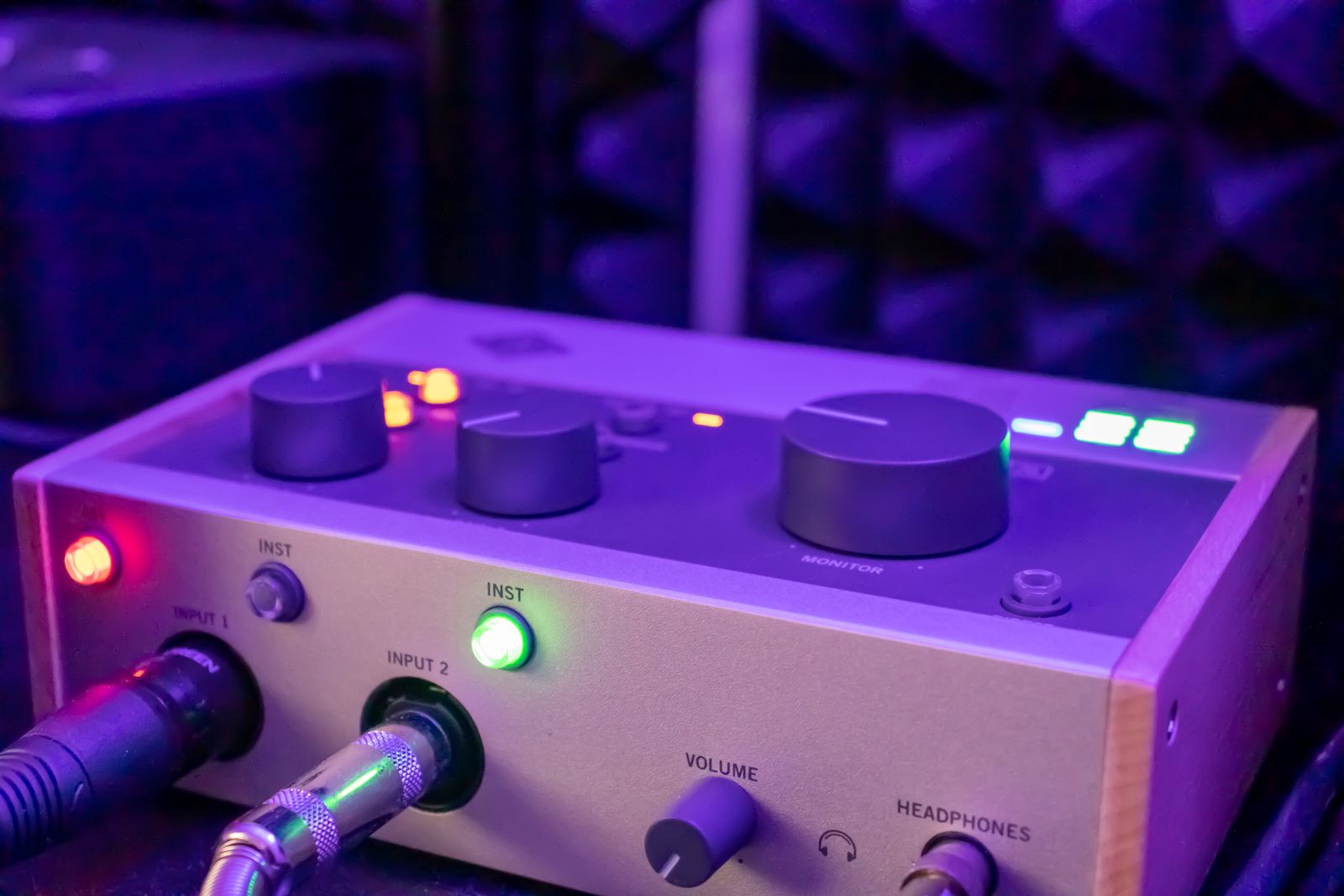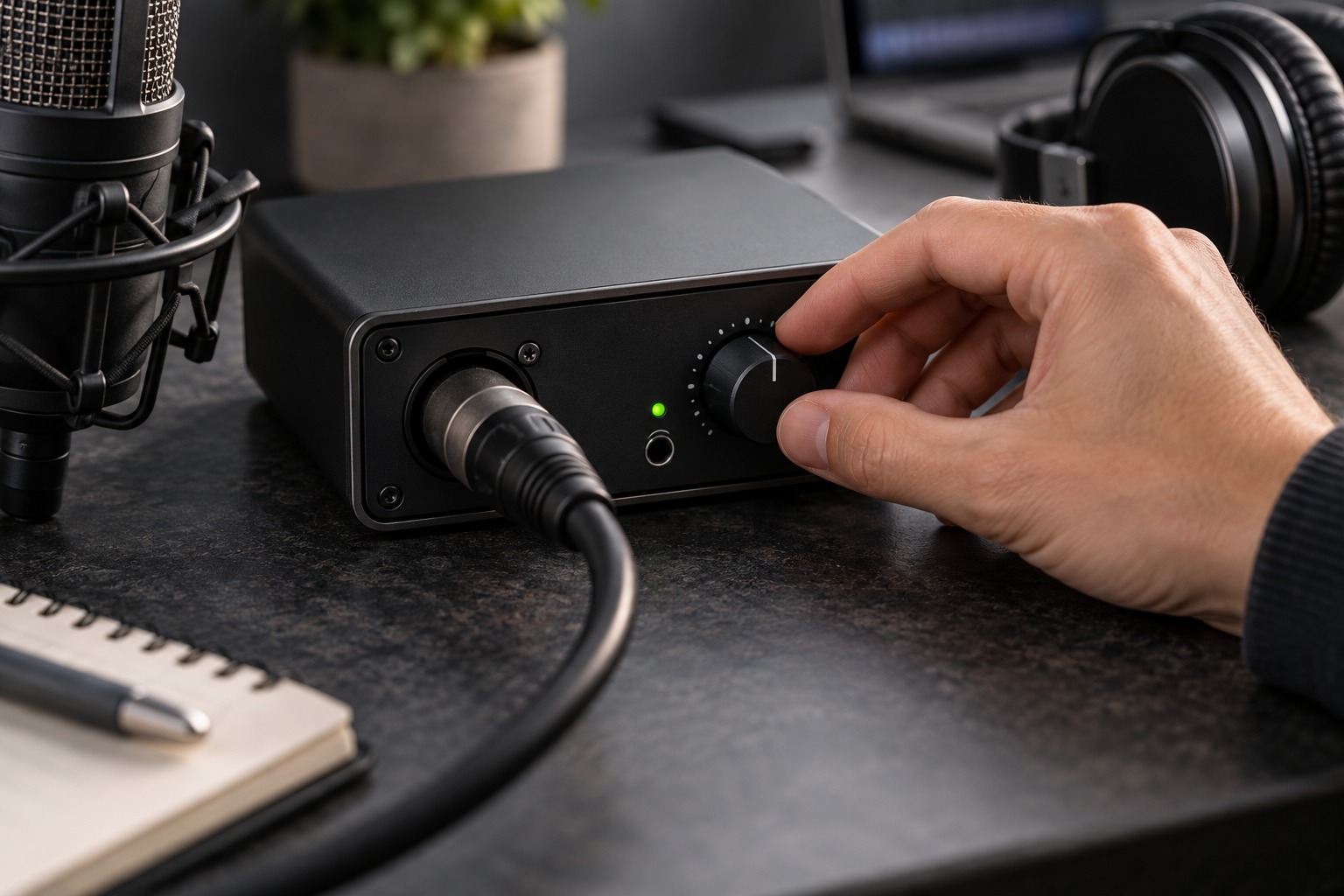
Check the equipment at both ends
Read whether the source output and destination input support a balanced connection. Yamaha’s interconnection guide explains the distinction between balanced and unbalanced audio paths and notes that a TRS cable does not make an ordinary guitar signal balanced. Choose the cable from the equipment specifications rather than from a general belief that more contacts must be better.
A balanced mono connection and an unbalanced stereo headphone connection can both use a TRS plug. Their conductors perform different jobs. Label the route in words, such as interface left line output to left speaker input, before selecting connectors. This prevents a stereo headphone output from being mistaken for one balanced channel.
Use the connection appropriate to the run
Where both devices support balanced line connections, use the specified balanced cable arrangement. For an unbalanced instrument connection, use the appropriate instrument cable and avoid unnecessary extensions. Keep audio runs tidy and away from obvious sources of mechanical damage. Cable routing is part of the setup even when the electrical connection is correct.
If one device is unbalanced, consult the equipment instructions for connecting it to the other. Adapter wiring matters, and there is no single plug-changing rule that suits every output design. Do not improvise by joining conductors based only on a photograph. A purpose-made cable with documented wiring is easier to verify than an unexplained chain of adapters.
Troubleshoot one link at a time
If hum or interference appears, test with a known-good cable and a simple connection path. Note whether the noise changes when a particular source is disconnected or moved. Keep mains safety earth connections intact. Balanced audio is not a reason to remove protective grounding or to assume every noise problem comes from the cable.
Label cables by their role when similar plugs are used for different jobs. Store spare instrument, line, and headphone leads separately enough that they can be identified quickly. A reliable home setup benefits more from correct wiring and repeatable routing than from buying an expensive cable without confirming what signal it needs to carry.