Verify what works without extra equipment
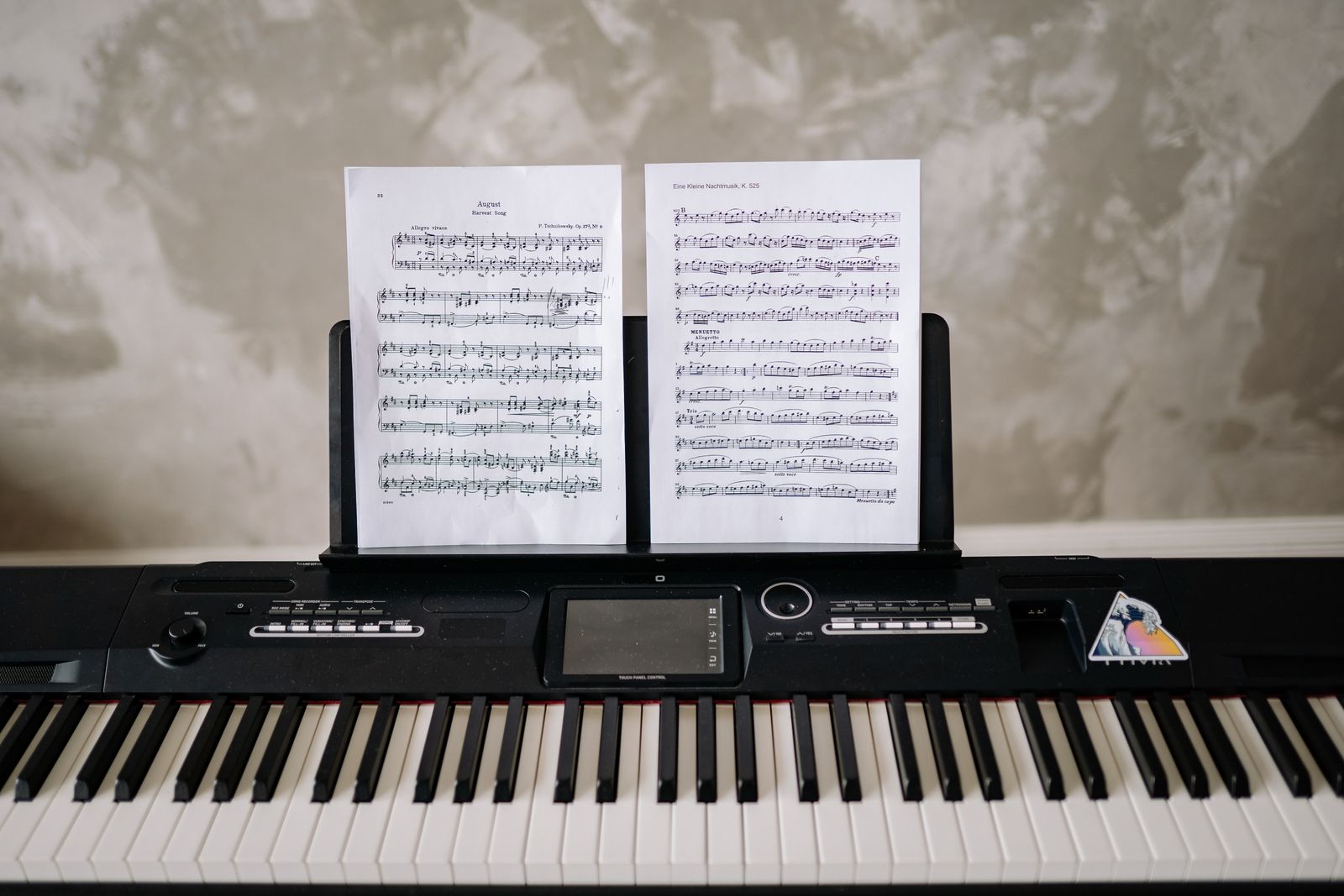
Confirm that the model has speakers rather than assuming every keyboard does. Some instruments intended for stage or studio use need headphones or external amplification. Check the included power supply, any supported battery operation and whether batteries are included. A keyboard is only ready to play when all required power and listening components are available.
Try the speakers at a normal room level. Listen from the playing position, not just from across the store. The sound may change when the instrument sits on a table that covers part of its underside, so follow the maker's support and clearance guidance. Do not use a soft bed or cushion as an improvised stand.
Choose the key behavior deliberately
Key count, physical key size and touch response are separate decisions. A compact keyboard may fit a small room while limiting the range available for two-handed pieces. Mini keys may suit portable sketching but differ from the spacing used in piano lessons. Ask what your intended course or teacher expects before treating portability as the only requirement.
Play soft and firm notes to check whether the sound responds to touch as expected. Look up the action description rather than inferring it from the word piano in a product title. A useful portable keyboard for accompaniment or composing can have different priorities from a home instrument intended to support acoustic-piano study.
Carry the complete setup
Add the weight and size of the stand, adapter, pedal and case to the keyboard itself. A light instrument can still produce an awkward collection of separate items. Check whether the case has a protected accessory area that keeps plugs from pressing against the keys or controls.
At home, test headphone use and confirm whether it mutes the speakers. If you want to play along with a phone, verify the specific audio-input or wireless feature. USB may provide MIDI control without carrying the phone's audio; the connector alone does not settle that question.
Before buying, run through a short ordinary session: power on, select the needed sound, set a comfortable level, use the pedal and pack away. Any step that requires a missing adapter or an inconvenient app is part of the real ownership experience. Choose around that routine rather than the largest number of preset sounds.