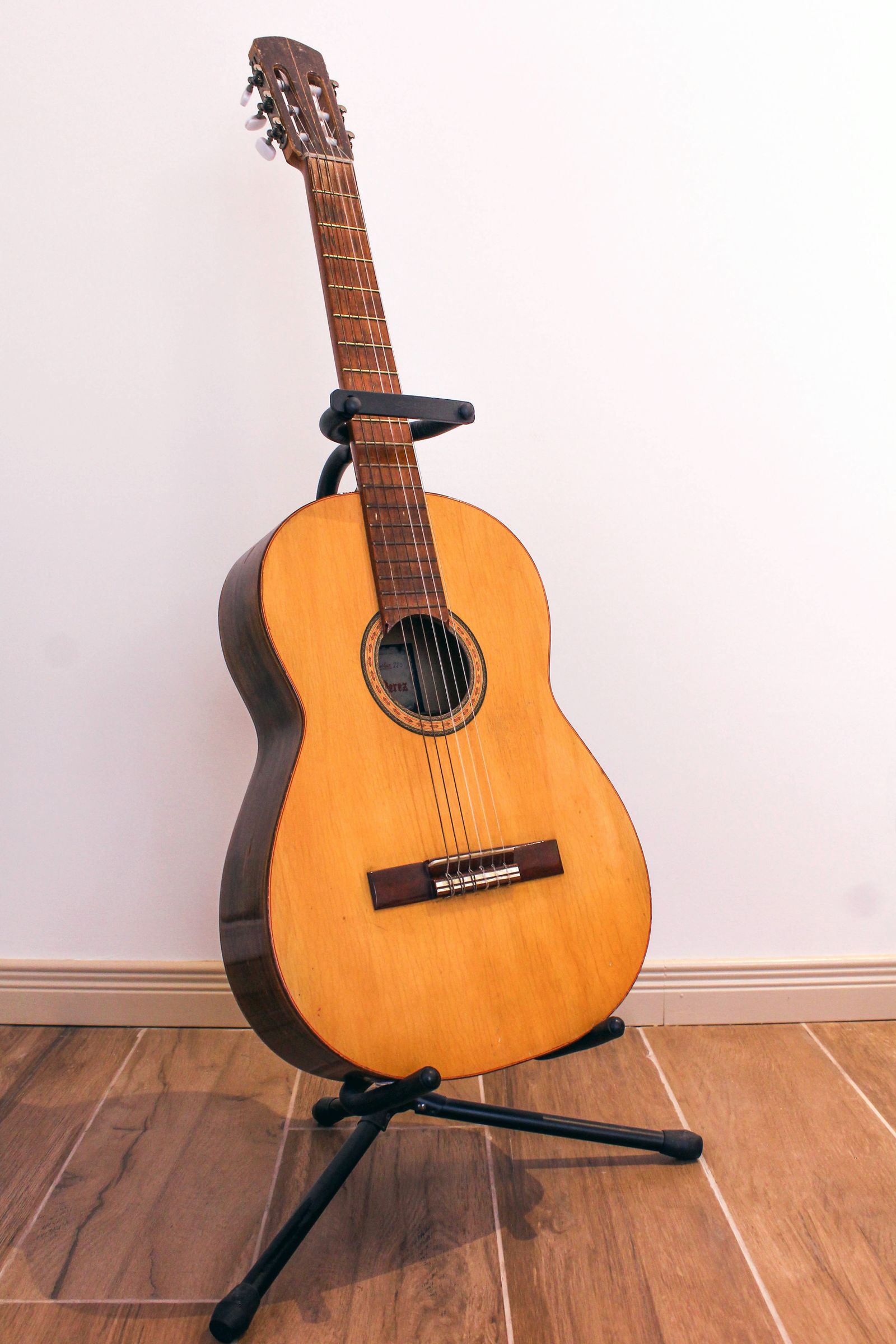
Sit down before comparing sound
Bring the chair height you normally use into the decision. A guitar that feels manageable while standing in a store can push your picking shoulder upward when you sit on a low couch. Rest the instrument in a normal playing position, with both feet supported, and notice whether you have to twist to see the strings. You should be able to look away from the fretboard without the guitar sliding out of position.
Try a few minutes of the simplest movements you expect to practice: placing a finger behind a fret, moving between two chords and reaching across the strings. A beginner does not need an impressive demonstration piece. If you cannot yet play, ask a teacher or store assistant to show the movement and then let you try it. Their comfort with the instrument cannot substitute for yours.
Separate neck fit from setup
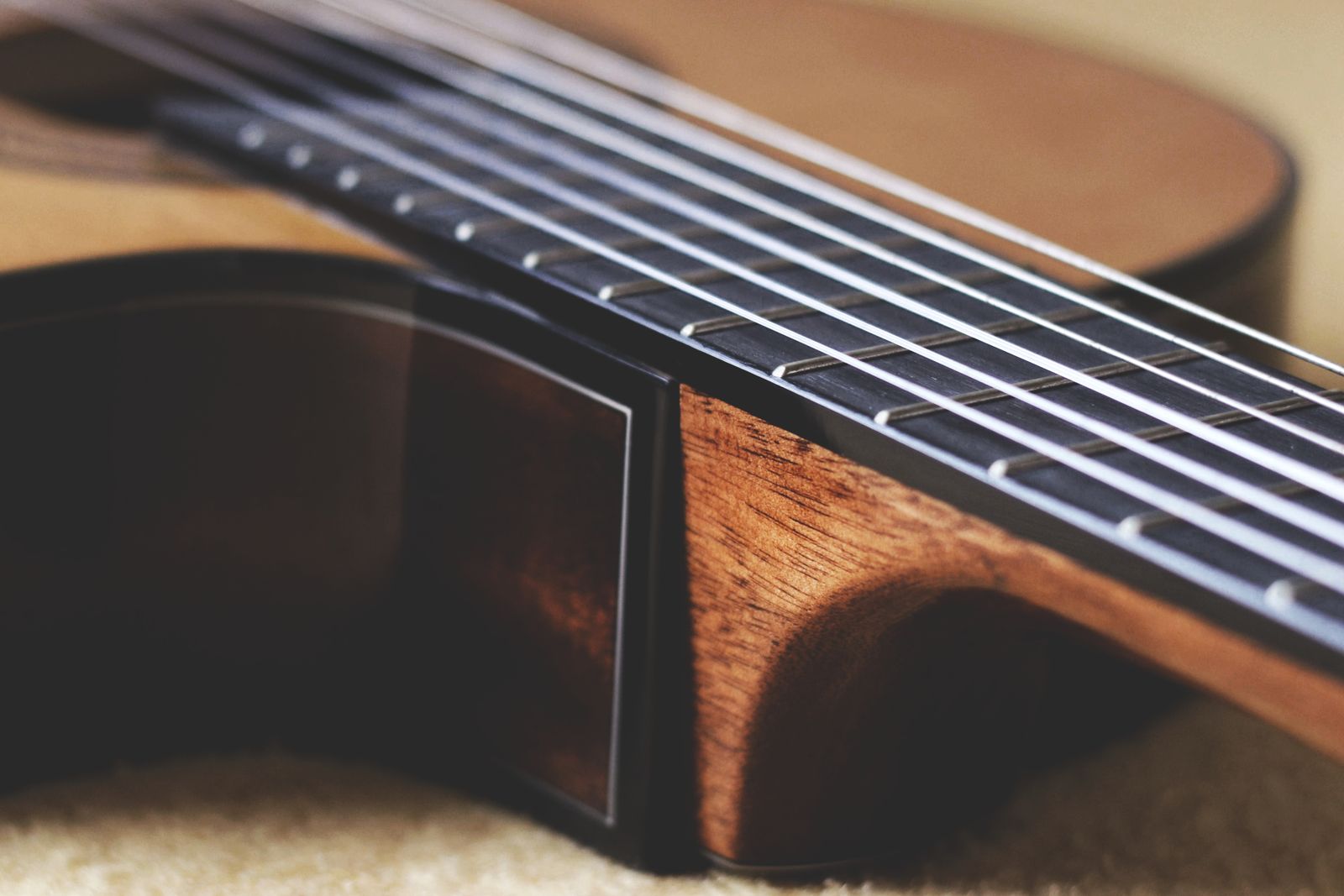
Nut width, neck depth and body depth describe different obstacles. A narrow neck may reduce the reach across the strings but leave less room between them. A shallow body can make the picking arm more comfortable without changing the fretting hand at all. Compare one feature at a time and note the model, since vague memories of a dozen instruments quickly blur together.
String height above the frets also affects the effort needed to play. Ask whether the shop has checked the setup and what adjustments are included with the purchase. A guitar that is difficult to fret is not automatically proof that your hands are too small. Conversely, a promise that any uncomfortable instrument can be fixed later is not a satisfactory demonstration. Have the proposed adjustment assessed before committing.
Leave room in the budget
A case or suitable bag, tuner and a modest supply of picks may matter more in the first month than elaborate decorative trim. If lessons are planned, ask the teacher about instrument type and size before buying. Keep any return period in mind so that the guitar can be tried in the actual practice space.
Finally, compare sound at an ordinary playing level. Ask for similar chords on each shortlisted guitar, using the same general technique, rather than judging one quiet fingerpicked example against an aggressively strummed one. Write down what you hear and what you feel separately. An instrument that sounds attractive but consistently makes you hunch or strain deserves a second comparison with a different body shape.