Make a full-size layout
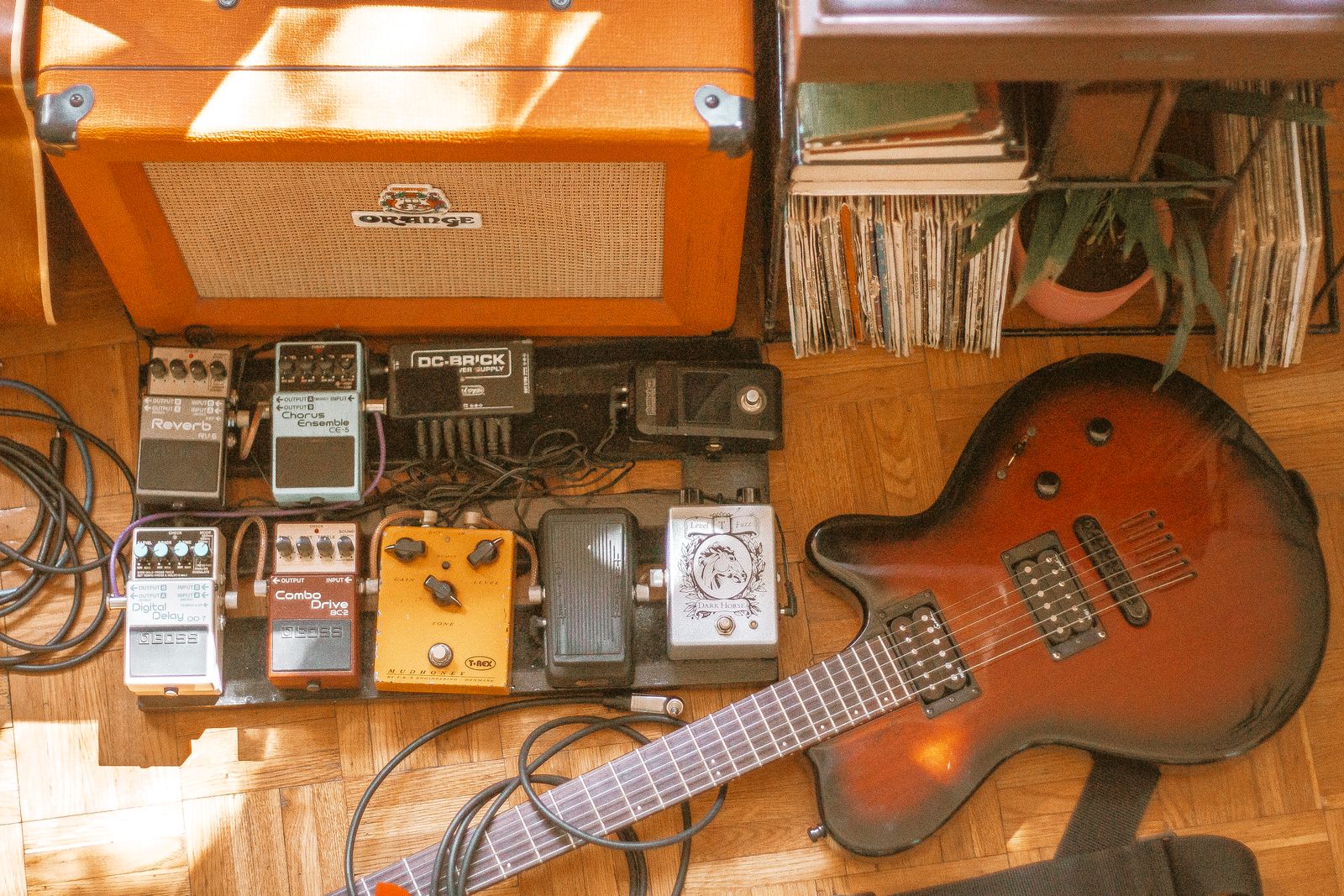
Place the pedals you own on a sheet of paper or a clear floor area. Include the space occupied by audio plugs, power plugs and any expression connections. Side-mounted sockets can require considerably more width than the bare pedal suggests. Top-mounted sockets change the gap between rows instead. Measure the arrangement after the cables are attached.
Operate every footswitch while wearing the shoes you normally use. Two pedals can fit neatly side by side yet be impossible to switch independently without catching a knob. Leave enough access for the controls you adjust often, especially on the back row. A board is a working surface rather than a packing puzzle.
Choose the shape around movement
A shallow single row is easy to see, but a very wide board may be inconvenient to carry or place in a small room. Multiple rows reduce width while making rear switches harder to reach. An angled board can improve access, provided the pedals stay secure and the height does not make a rocker pedal uncomfortable.
If you use a wah, volume or expression pedal, account for its entire travel and your foot above it. Do not place it so close to another unit that the toe hits a switch or the cable prevents full movement. Try the arrangement while standing before committing to mounting material.
Power and transport use the remaining space
Decide whether the supply will sit on top or underneath. An underside mount needs enough clearance and a compatible attachment method. Check cable exits, ventilation requirements and access to switches. A supply that fits between the rails may still obstruct the board's feet or case lining.
Put the proposed board in its intended bag or case with the pedals attached. Confirm internal height as well as length and width. Knobs and jacks should not carry pressure from the lid. A removable cable at the board edge can make transport simpler, but label it so reconnection is unambiguous.
Leave a modest amount of space for a known next addition rather than buying a board twice as large for an undefined future collection. The layout should support the music you play now. A drawing with actual pedal outlines, plugs and foot access makes later changes easier to assess without repeatedly replacing the board.