Start at the attachment points
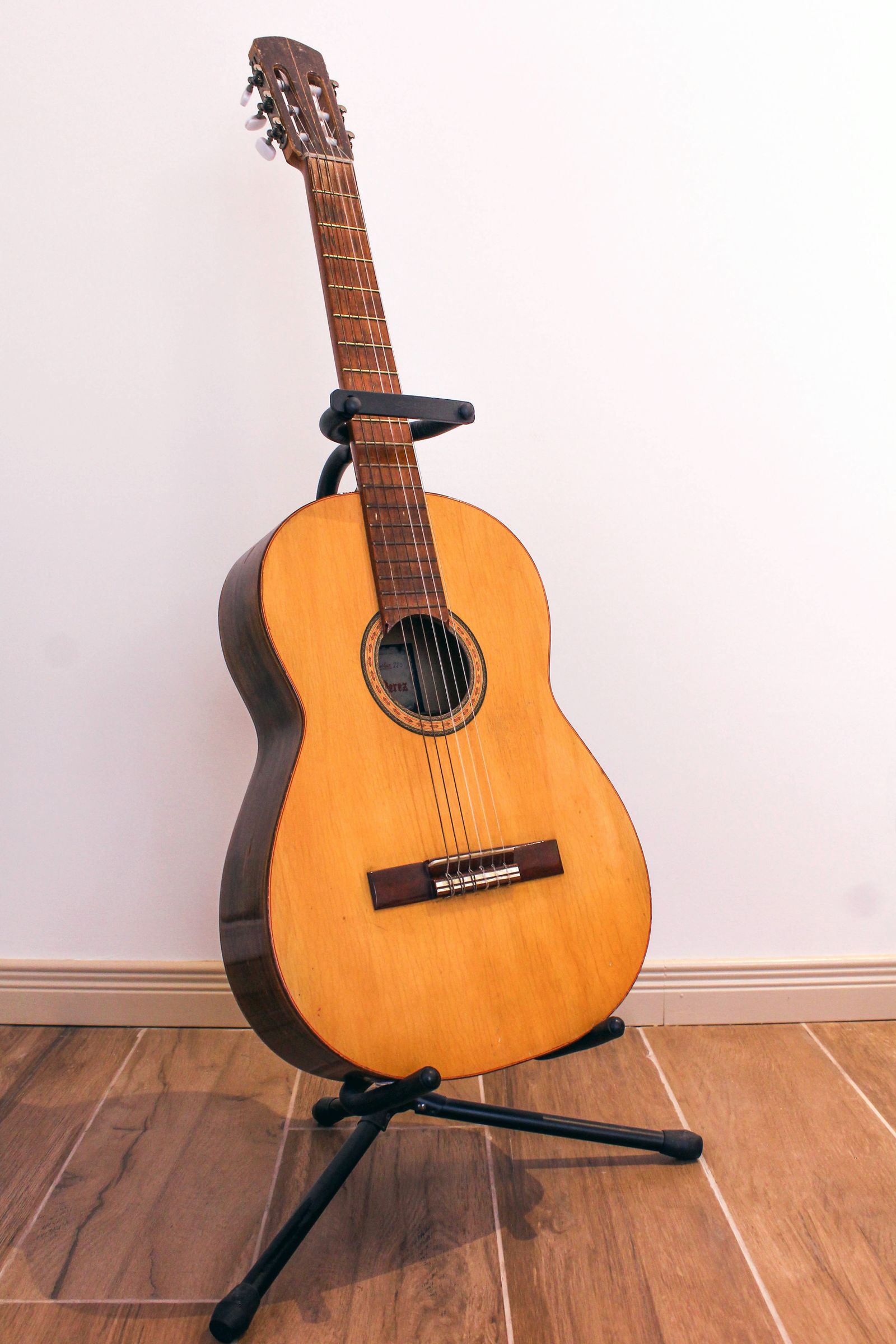
Count and identify the attachment points on the guitar. Some acoustics have only an endpin and require a maker-approved attachment arrangement at the other end. Others have a strap button near the neck joint. Do not drill a new button into an unfamiliar instrument without qualified advice about the correct location and construction.
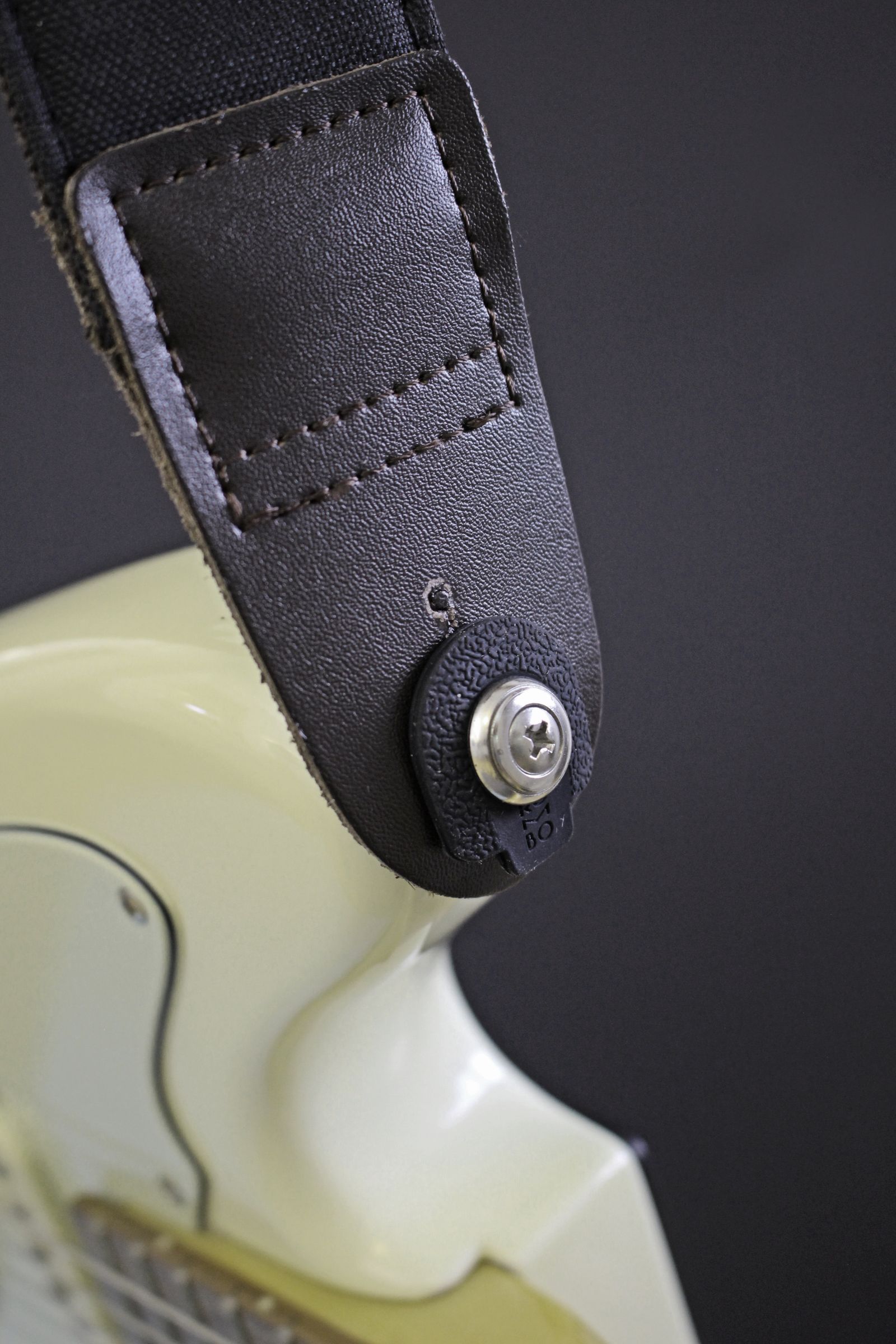
Compare the strap ends with the actual buttons. Thick material is not automatically secure if the opening is too large or the end does not seat properly. If you use a locking system, verify that its guitar-side and strap-side pieces are designed to work together. Similar appearance is not proof that two brands' parts will latch safely.
Adjust while holding the guitar
Support the instrument with your hands while setting strap length. Move gradually toward the height at which you can reach the frets and picking area comfortably. The adjustment range printed on the package should cover that position with room to spare; it is frustrating to reach the end of the range before the guitar sits correctly.
A wider strap spreads contact over a larger area, but edge stiffness, padding and surface texture also affect comfort. Try it over the clothing you usually wear. A very grippy underside may hold a position well while making it harder to shift the guitar deliberately; a slippery one may let a neck-heavy instrument move more than you want.
Inspect moving parts and loose ends
Look at the adjuster, stitching and any buckles near the instrument. Hardware should not scrape the finish during normal movement. Check where excess strap length hangs and whether it can catch on a stand, chair or cable. A short rehearsal of sitting, standing and turning is more revealing than a stationary fit check.
Before releasing your hands, make sure both ends are fully engaged. Repeat that check whenever the strap has been removed or the guitar has been packed away. Worn holes, torn stitching or a loose guitar button need attention rather than an improvised knot that hides the problem.
When storing the instrument, arrange the strap so that buckles or locking parts cannot press into the body inside the case. If the case is designed for the guitar alone, remove the strap and use a separate pocket. The case lid should close freely, without using its latches to compress a bundle of hardware against the instrument.