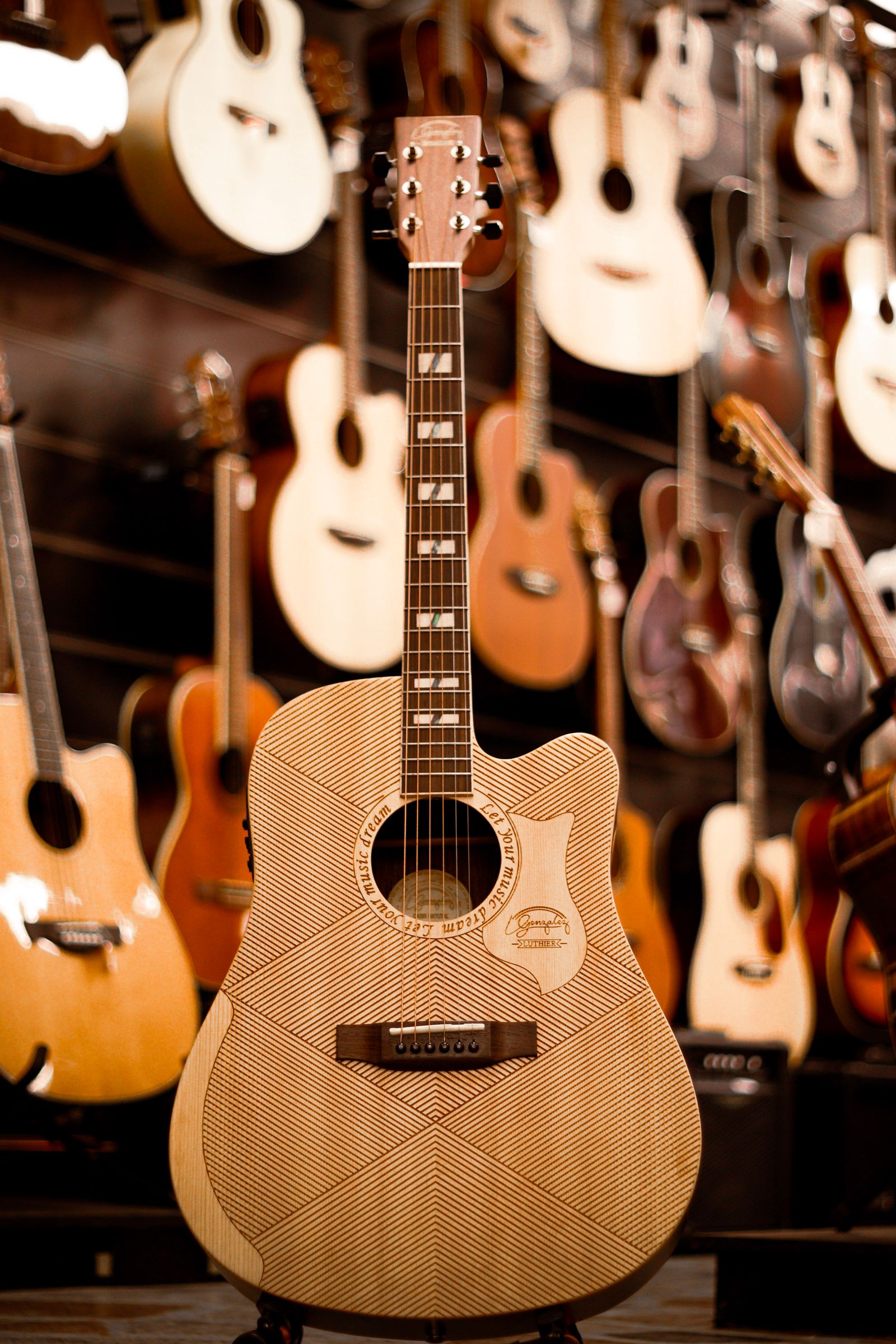
Map the floor before choosing a shape
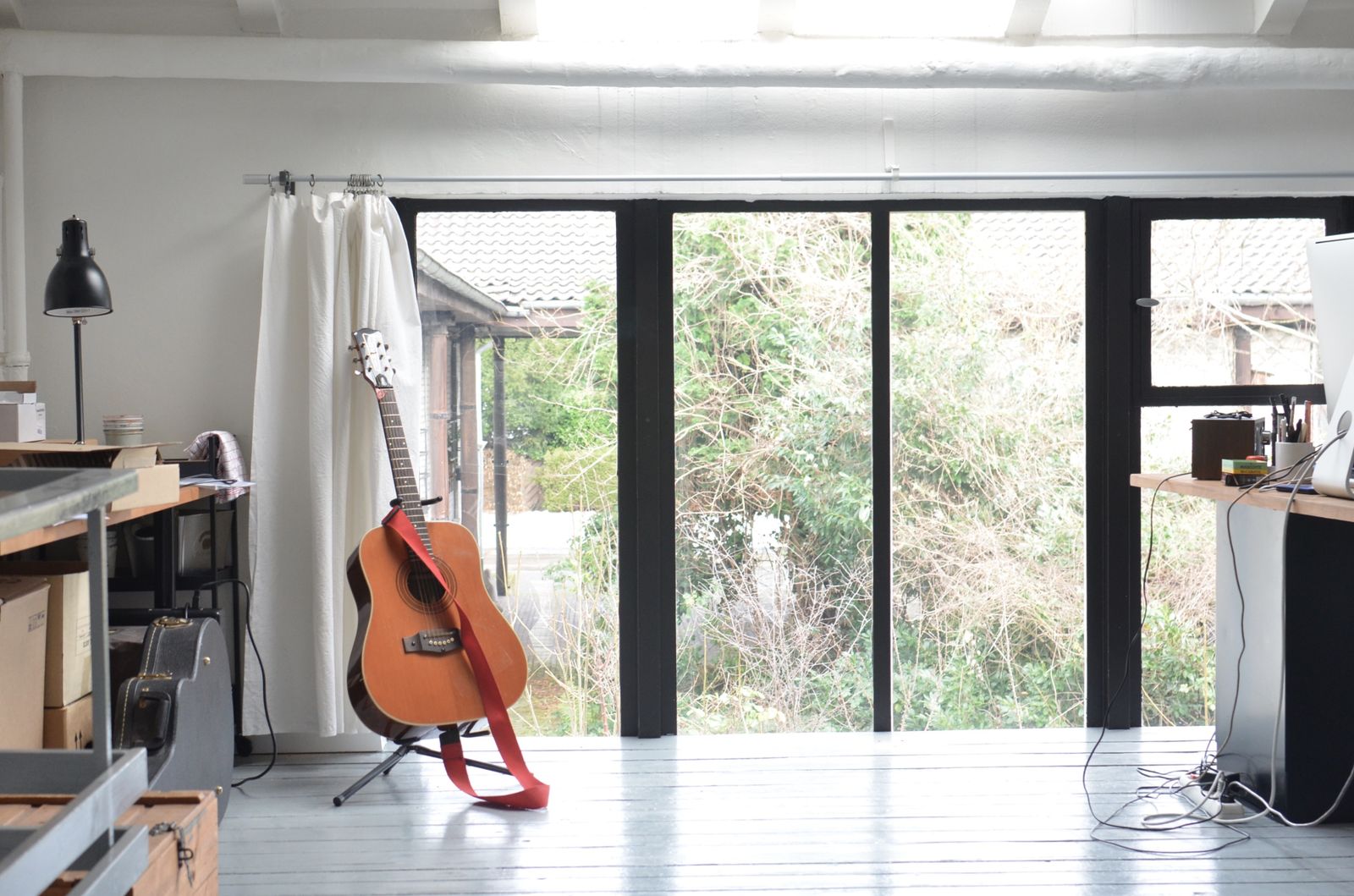
Place a paper outline where you expect the stand to sit, including its legs rather than only the guitar body. Walk past it, move the chair and open nearby doors. A compact-looking stand can still project into a route through the room. The guitar should not depend on everyone remembering to step around a hidden foot.
Choose a position away from direct heat, strong sunlight and places where a cable is likely to be pulled. A stand does not protect the instrument from a pet, a rolling chair or a falling object. If the room cannot offer a stable protected location, a suitable case may be a more realistic storage choice.
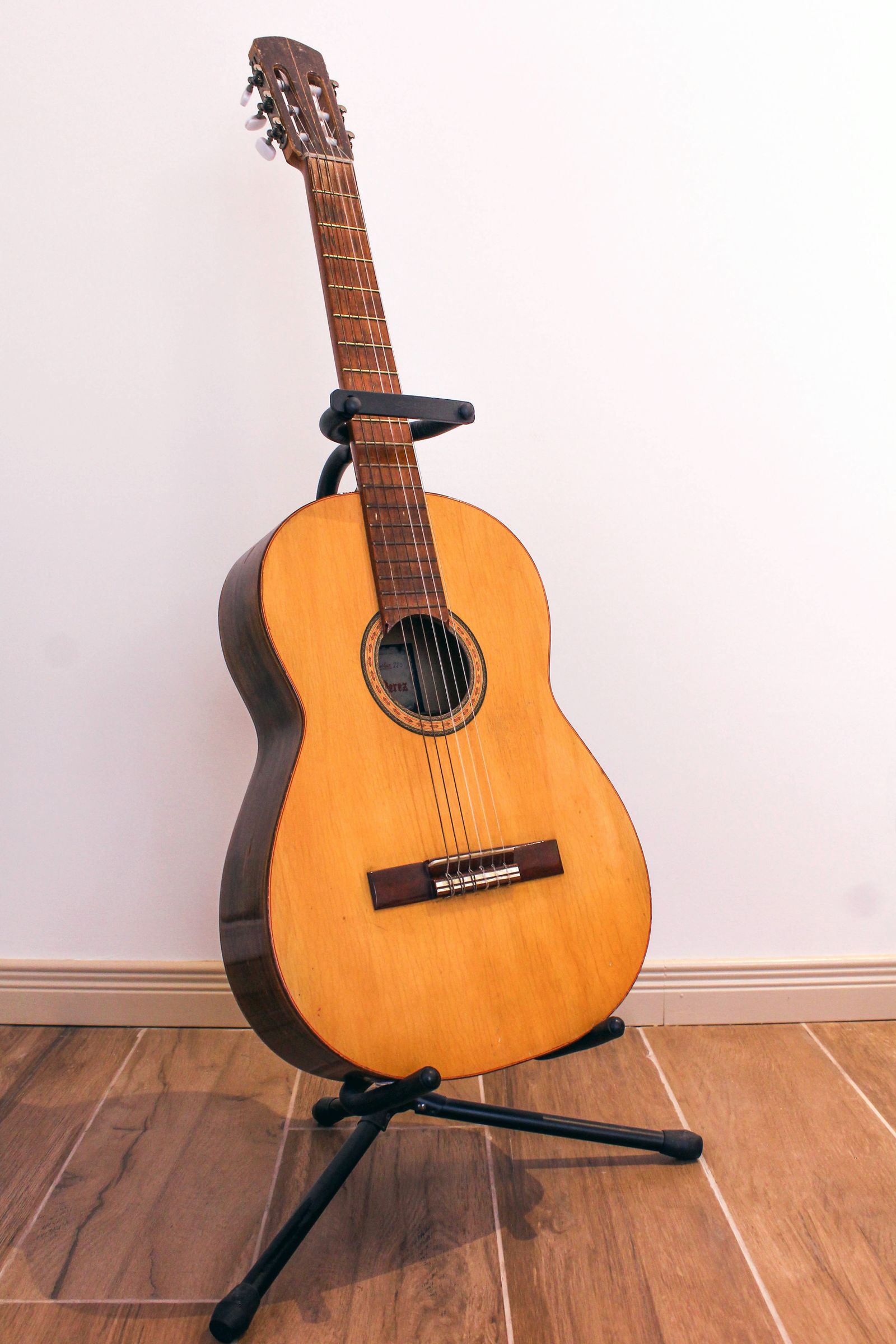
Check every support point
The lower cradle must support the body shape without pressing on a control, cable jack or unusually thin edge. An electric-guitar stand and an acoustic-guitar stand may have different support depths. Set the instrument into the stand while holding it, then inspect where the body and neck actually touch.
For a neck-supporting design, confirm that the yoke accommodates the headstock shape and that any retaining mechanism closes as intended. Do not assume that a lock has engaged because the guitar appears upright. Folding joints and height locks should be fully secured before the instrument is placed on them.
Padding is part of compatibility
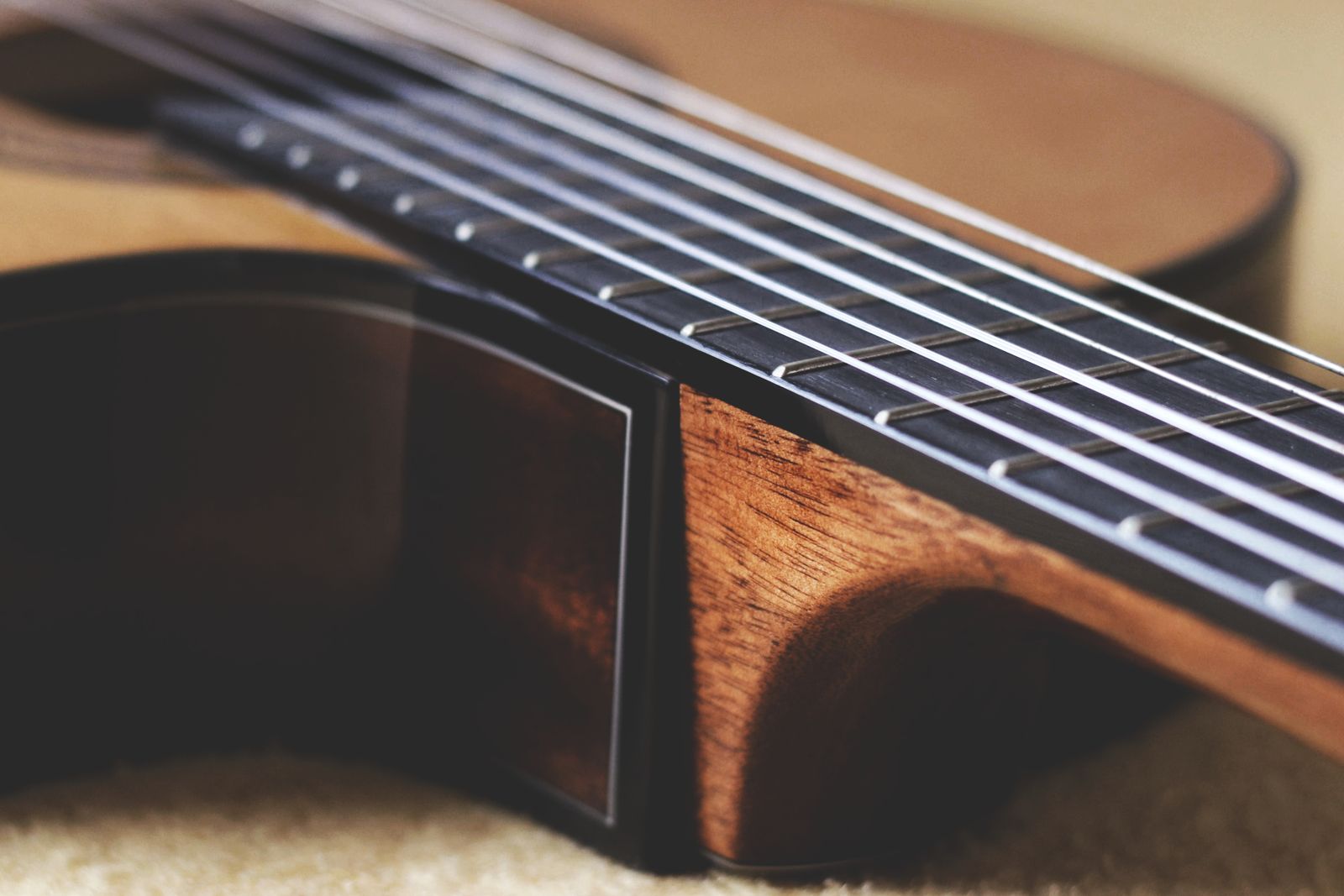
Identify the guitar finish and check the stand manufacturer's guidance. Soft-looking foam or rubber is not a universal guarantee of finish compatibility. K&M's guidance for its translucent supports still notes special concerns with incompletely hardened nitro finishes and recommends consulting the guitar maker. Avoid turning a material claim into a promise that every finish is safe indefinitely.
Keep the pads clean and inspect them for splits or grit. Adding an improvised cloth can change how securely the guitar sits, so do not use fabric to disguise a poor fit. If the maker offers a compatible replacement pad, use the correct part rather than allowing bare metal or hard plastic to contact the instrument.
A stand works best as a convenient resting place during an established practice routine. Periodically check fasteners and the surrounding floor, especially after moving furniture. For longer storage, follow the instrument maker's case and environmental guidance instead of assuming that a display position is also a preservation system.