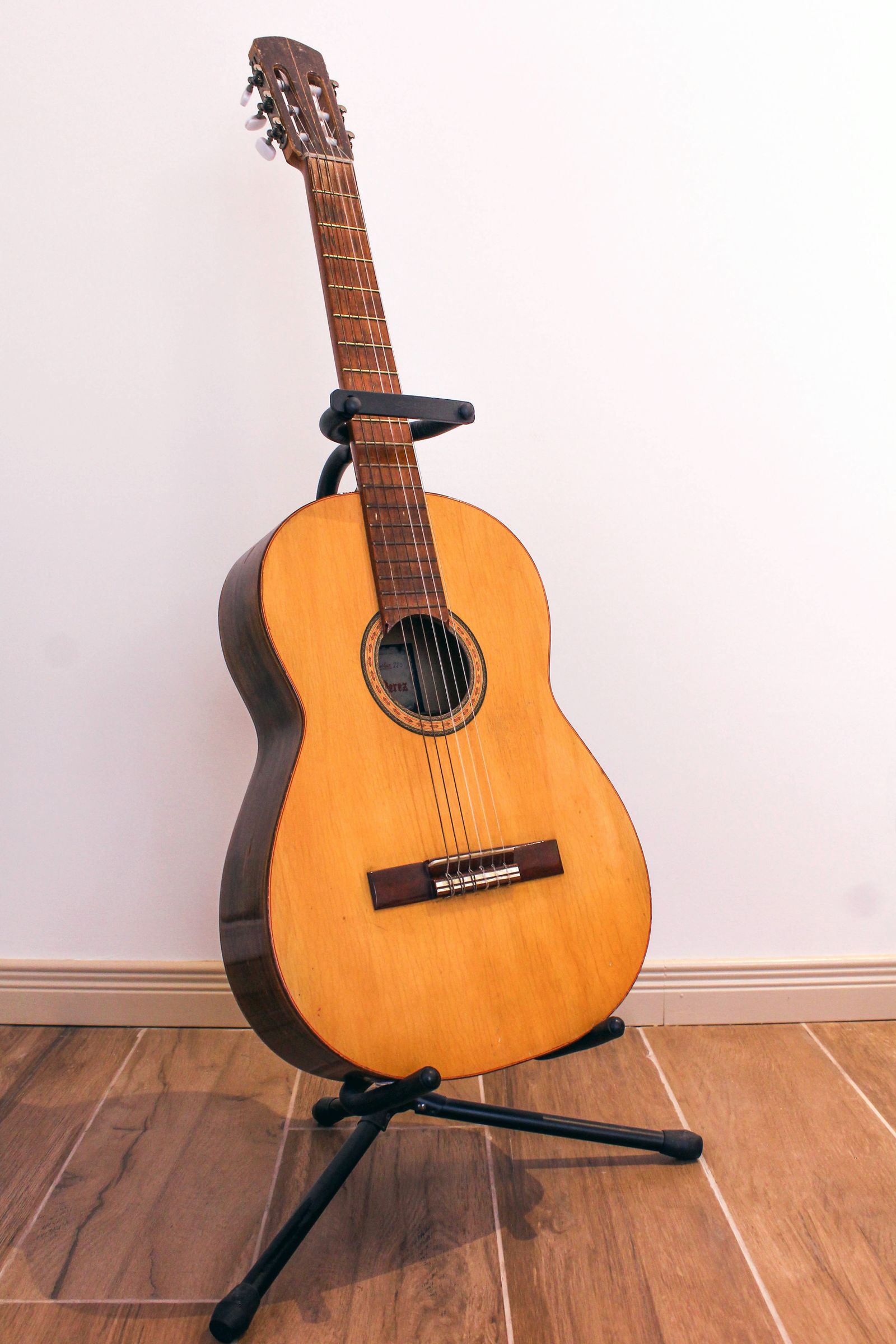
Do not shop by a letter alone
C, U and V are broad descriptions, not dimensions shared by every manufacturer. Two necks sold under the same letter can differ in depth, shoulder shape and the way they become thicker toward the body. If a particular instrument feels good, note its exact model and production specification rather than looking only for another C-shaped neck.
Hold the guitar in your normal position and play slowly. The point is to notice where the neck supports your hand, not to see how fast you can move. A profile that fills the palm comfortably for a chord may feel different when the thumb shifts behind the neck for a wider interval. Give both movements a fair trial.
Keep unrelated variables visible
Nut width determines the overall width near the first fret, while string spacing determines how crowded the strings feel. Fretboard curvature affects the playing surface; it is not the same thing as the rounded back of the neck. When comparing specifications, put each dimension in a separate column so that a favorite profile does not hide an unsuitable width.
The finish can also influence the impression. A glossy neck and a satin neck may feel different even with similar dimensions. Try them with clean, dry hands under ordinary conditions. Do not sand, polish or otherwise alter a new instrument just to imitate another finish; first establish whether its factory surface is comfortable enough for regular playing.
Make a short repeatable audition
Select a chord near the nut, a few single notes around the middle of the neck and a passage that uses the upper frets. Add a small bend only if it is part of your playing. Repeat the same sequence on each guitar, then write a sentence about the hand position that felt easiest and the one that felt awkward.
Allow time between comparisons. A very thin neck can feel immediately novel after a thick one, while a fuller neck can initially seem cumbersome and then feel supportive. Neither reaction is a universal ranking. If you are new to guitar, a teacher can watch for unnecessary gripping that would make every neck feel difficult.
When buying online, examine the return conditions and ask for actual neck dimensions if the listing only uses a marketing name. You are choosing a physical interface used for many small movements. The best specification sheet is the one that helps you predict those movements, and the final check is an unhurried attempt to play them.