Match the contact surface
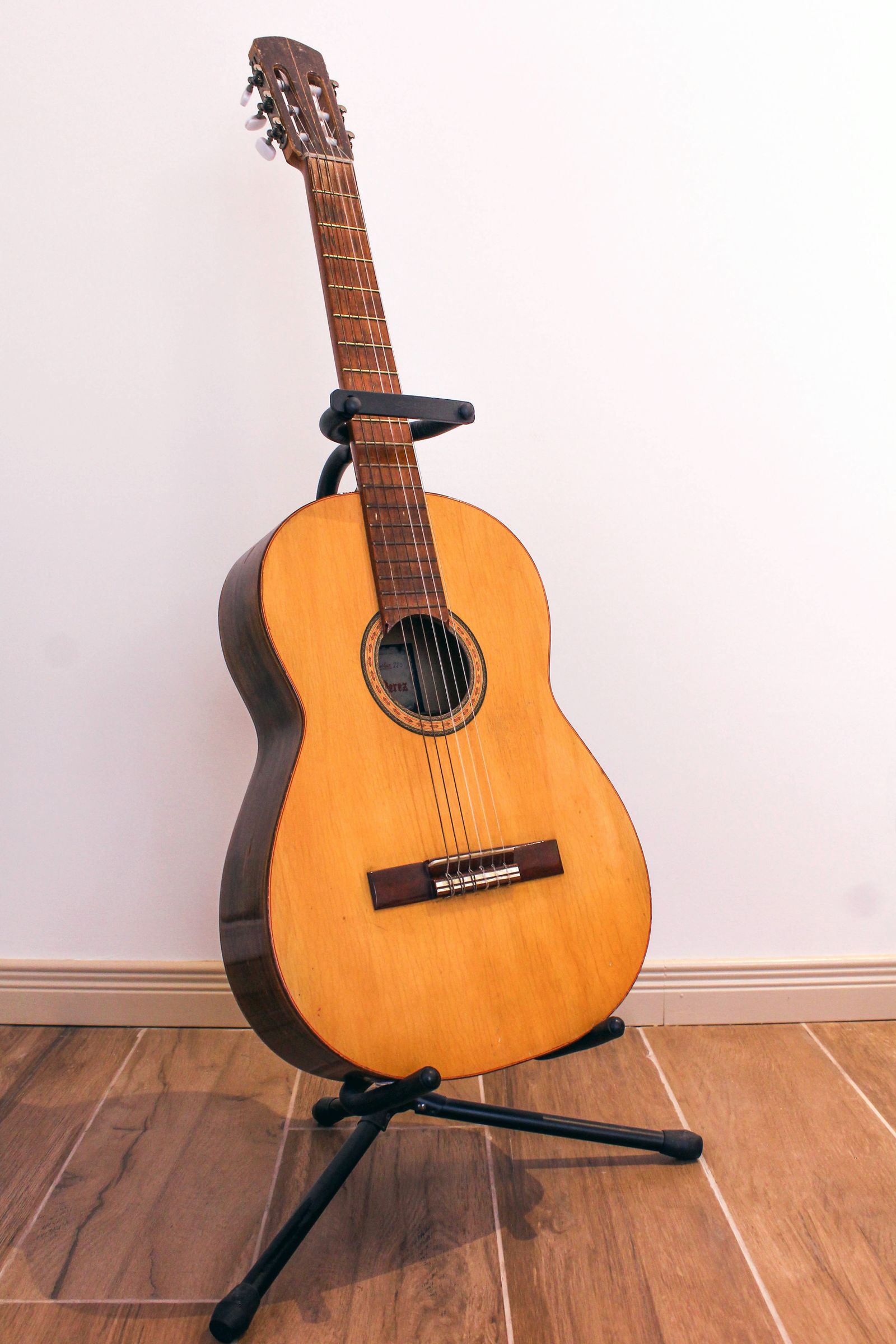
Check whether the capo is intended for a flat classical fingerboard, a curved steel-string fingerboard or a wider instrument such as a twelve-string guitar. The padded bar needs enough usable width for the strings at the fret where you will place it. A capo that just reaches across at the first fret may be less suitable farther up a widening neck.
The maker's compatibility guidance is more reliable than an all-guitars description in a marketplace listing. Shubb explains that fretboard curvature and pressure adjustment influence how evenly its capos work. Treat a model recommendation as a starting point, then verify it on the particular neck and strings.
Use only the pressure needed
Too much pressure can pull notes sharp; too little can leave a string buzzing. An adjustable design gives you a way to find the necessary pressure, while a spring design offers a fast attachment routine. Compare those tradeoffs by placing the capo, playing each string and checking a chord. Speed is not helpful if the result needs repeated correction.
Position it according to its instructions, generally close enough behind the chosen fret to avoid unnecessary pressure. Make sure the rear part does not sit where your thumb needs to move. Check the first chord shape you intend to play, not just an open strum with the capo attached.
Test the whole routine
Try fitting and removing the capo while holding the guitar securely. Some mechanisms are convenient with one hand; others require more deliberate adjustment. If you frequently change positions during a set, practice that movement. For home use, a slower design may be entirely acceptable if it applies pressure consistently.
Inspect the padding before each use and keep grit away from the contact surfaces. Do not use a worn pad that exposes metal, and do not leave the capo clamped on the instrument as a default storage habit unless the manufacturers allow it. A small case pocket is a better place for a loose capo than a compartment where it can strike the guitar.
Finally, keep the packaging or model number. If you later buy another guitar, you can check whether the existing capo is suitable instead of assuming that a successful fit on one neck proves compatibility with every other instrument.