Where the tuner will live
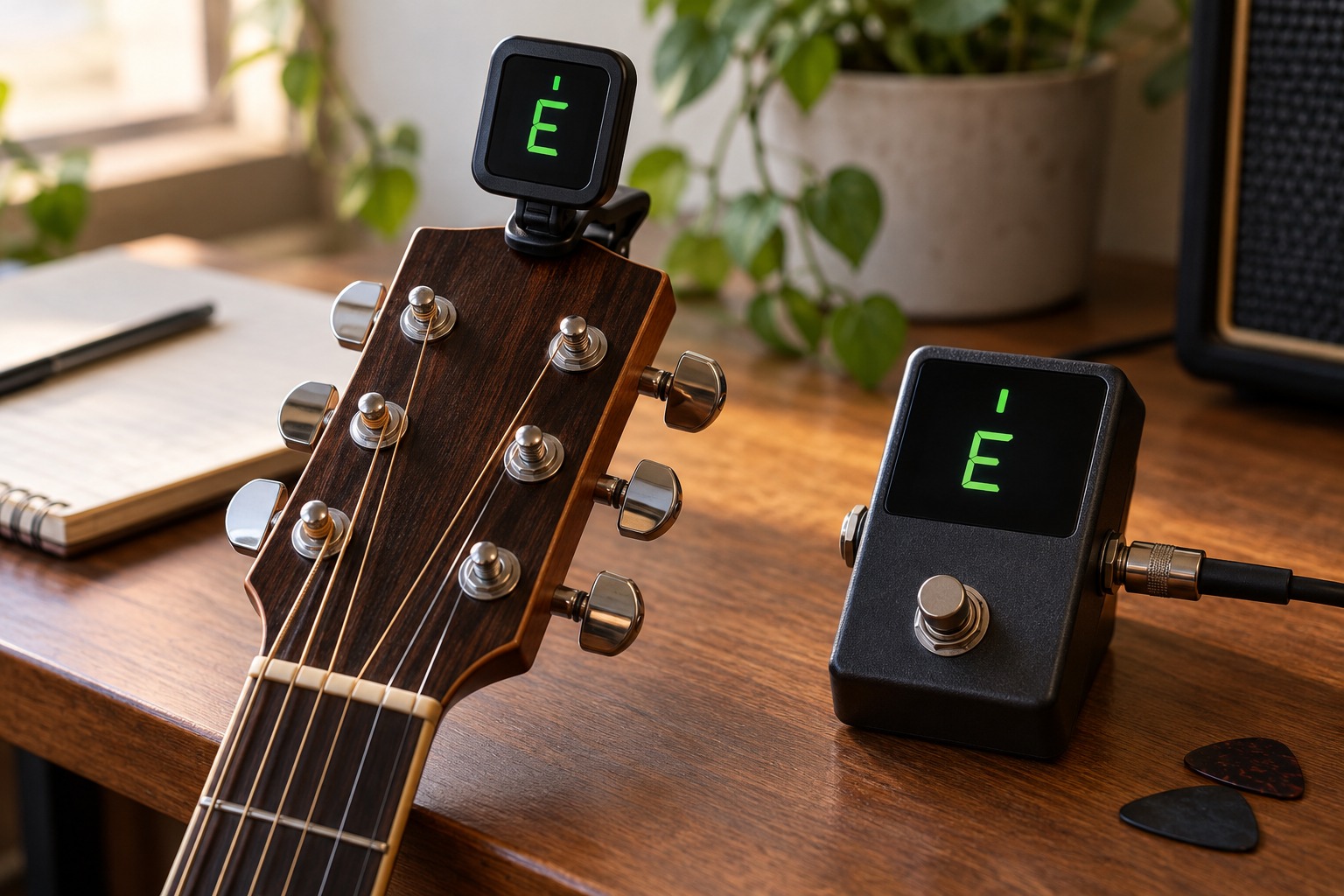
A clip-on tuner travels with an acoustic instrument without requiring a pickup or cable. Check the clamp opening, padding and screen articulation against the actual headstock. A display that faces you in a photograph may be hidden by your hand or a tuning key on your guitar. Try reading it from the seated position you use for practice.
A pedal tuner belongs in a wired instrument setup. It takes space on the floor or pedalboard, needs appropriate power and adds cable connections. That may be a worthwhile trade if you want to tune without reaching toward the headstock. Mark out its footprint with the plugs included, not just the metal enclosure.
Mute behavior is worth checking
Do not assume every output on a tuner pedal becomes silent when tuning. The BOSS TU-3 manual, for example, distinguishes its muted OUTPUT from a BYPASS jack that remains audible. Read the manual for the model and connection you will use. A mute function is helpful only if the rest of your signal actually passes through the muted path.
For a clip-on, consider where you will keep it when not playing. Leaving it attached indefinitely may not be appropriate for every instrument finish. Follow the tuner and guitar makers' guidance about contact materials, and store it where the clamp cannot be crushed by other case contents.
Read the tuning functions
A chromatic display identifies notes beyond one fixed string sequence. This can be useful for alternate tunings, but a beginner still needs to know the intended note and octave. A string-number mode can be convenient for standard tuning while being confusing if the instrument is deliberately tuned differently. Check what the screen is telling you before turning a key through a large interval.
Compare visibility in the lighting where you practice, including the angle from your normal standing position. Small note names and color changes may be harder to distinguish than the overall screen brightness suggests. Battery access and replacement type also matter if the tuner is packed away between sessions.
Try a slow, single plucked note, let the display settle and make a small adjustment. The product should make that routine clear. A long list of extra modes is less useful than a readable indication and controls you can operate without accidentally changing the reference setting.